By Joseph Bryson December 26, 2025
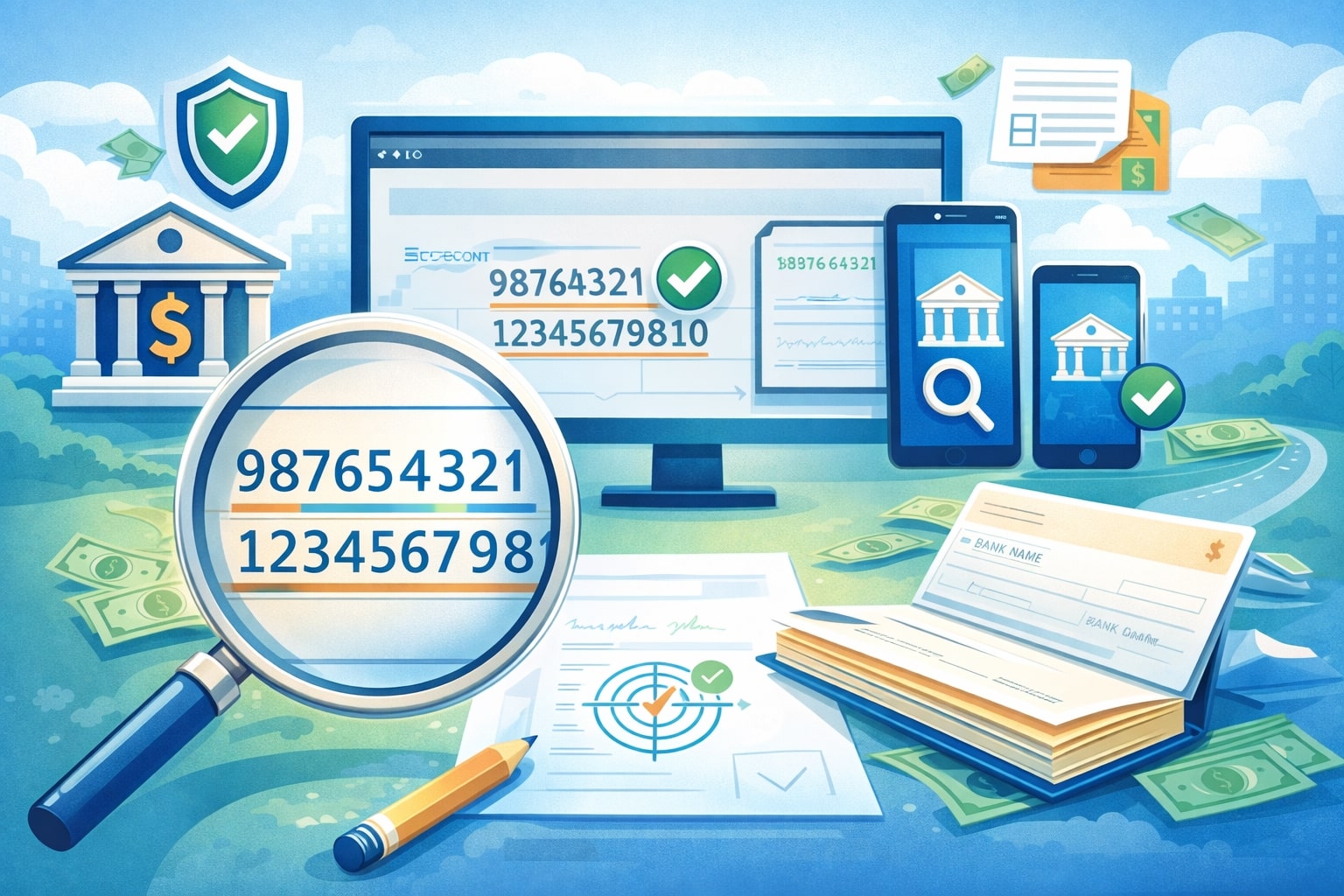
ACH routing numbers are the nine-digit bank identifiers used to route electronic payments through the Automated Clearing House (ACH) network.
When you send money by direct deposit, pay bills electronically, set up recurring withdrawals, or connect a bank account to a payment app, the system often relies on ACH routing numbers to ensure funds travel to the correct financial institution.
It helps to think of Automated Clearing House (ACH) routing numbers as “address codes” for banks and credit unions. Your account number identifies your specific account, while the routing number identifies where that account lives.
In many everyday payment flows—payroll, subscription billing, rent payments, invoice payouts, and vendor disbursements—ACH routing numbers are a core piece of the routing logic that reduces errors, speeds up reconciliation, and standardizes how financial institutions communicate.
Because banking has multiple rails (wire transfers, ACH transfers, card networks, real-time payments, internal book transfers), confusion is common. People sometimes assume one routing number works for everything.
In reality, Automated Clearing House (ACH) routing numbers may differ from wire routing numbers, and a bank can have multiple routing numbers depending on region, legacy mergers, or product lines. Using the wrong one can lead to returned payments, delayed payroll, or failed account verification.
This guide explains what ACH routing numbers are, where they come from, how they work in ACH transfers, how they differ from other routing codes, and how to find and validate them.
You’ll also learn practical tips for businesses and individuals, common errors to avoid, and what future payment trends might mean for Automated Clearing House (ACH) routing numbers over the next few years.
What ACH Routing Numbers Actually Identify
At the most practical level, ACH routing numbers identify a financial institution within the ACH network. They are formally known as routing transit numbers (RTNs) and are nine digits long. When an ACH payment is initiated, the routing number tells the network which institution should receive the transaction so it can be posted to the correct customer account.
ACH routing numbers are not random. They are assigned under a standardized system and are structured so that systems can quickly validate them.
That structure matters because ACH processing runs at enormous scale: payroll files, bill pay batches, subscription billing runs, and business-to-business disbursements can include thousands or millions of transactions. A consistent routing format enables automation, reduces manual handling, and improves return handling when something doesn’t match.
Importantly, Automated Clearing House (ACH) routing numbers identify the institution—not the account, not the card, and not the person. That’s why ACH setups always require both the routing number and the account number. If you enter the correct account number but the wrong routing number, the payment may be rejected or sent to the wrong institution and returned.
Many banks support multiple routing numbers. A regional routing number might be used for checks and ACH, while a separate number may be used for wire transfers. Some institutions also have routing numbers dedicated to specific states or processing centers.
This is one reason why businesses that collect bank details from customers should clearly label the field as Automated Clearing House routing numbers (or “routing number for ACH/direct deposit”) rather than just “routing number.”
How ACH Transfers Work and Where ACH Routing Numbers Fit In
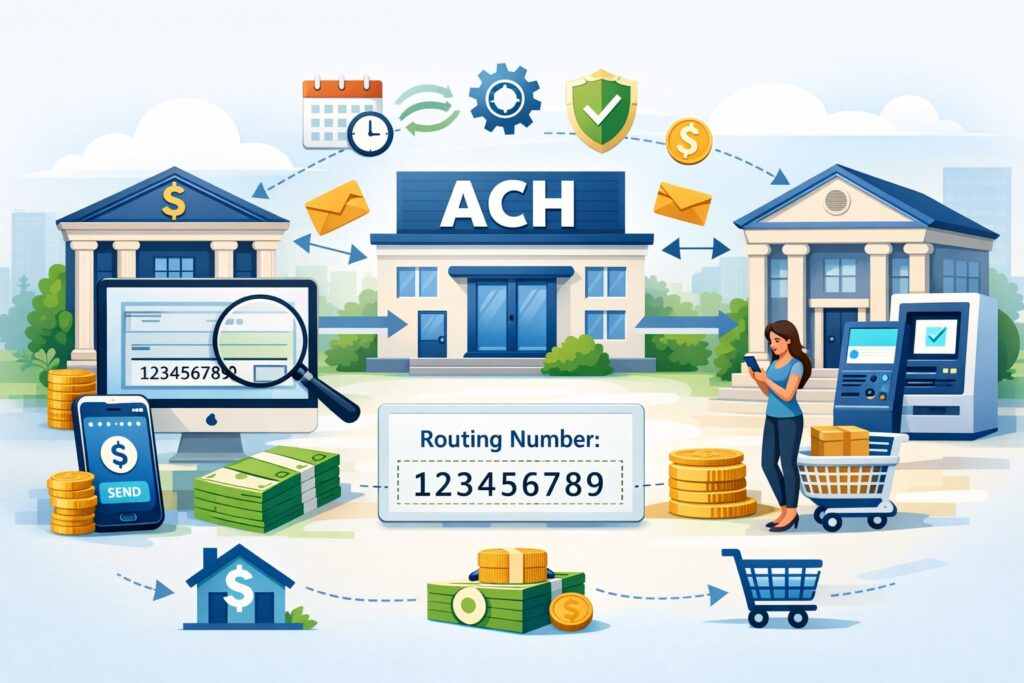
The ACH network is designed to move funds electronically between accounts, typically in batches. In a basic flow, an originator (like an employer or business) sends a payment instruction to its bank or payment provider.
That instruction includes the recipient’s account number and Automated Clearing House routing numbers. The transaction is then delivered to the receiving institution, which uses the account number to credit or debit the appropriate account.
In most common cases, ACH transfers fall into two categories:
ACH Credits (Money Going To the Receiver)
Payroll direct deposits and vendor payouts are ACH credits. The sender pushes money out. Here, Automated Clearing House routing numbers are critical because they point the credit to the correct institution so the deposit can be posted accurately and on time.
ACH Debits (Money Pulled From the Customer)
Subscriptions, loan payments, utility bills, and many recurring charges are ACH debits. The business pulls money from the customer’s account. Again, ACH routing numbers guide the debit request to the customer’s institution.
What makes this especially important is that ACH debits and credits use standardized “entries” and return codes. If the routing number is invalid, mismatched, or points to the wrong institution, the transaction is more likely to return with a failure code, causing payment delays and additional fees for the business.
Because Automated Clearing House routing numbers sit at the center of these flows, accurate data entry and verification matter. For businesses, improving the quality of routing data directly reduces payment failures, lowers customer support volume, and improves cash flow predictability.
ACH Routing Numbers vs Wire Routing Numbers: Why They Can Be Different
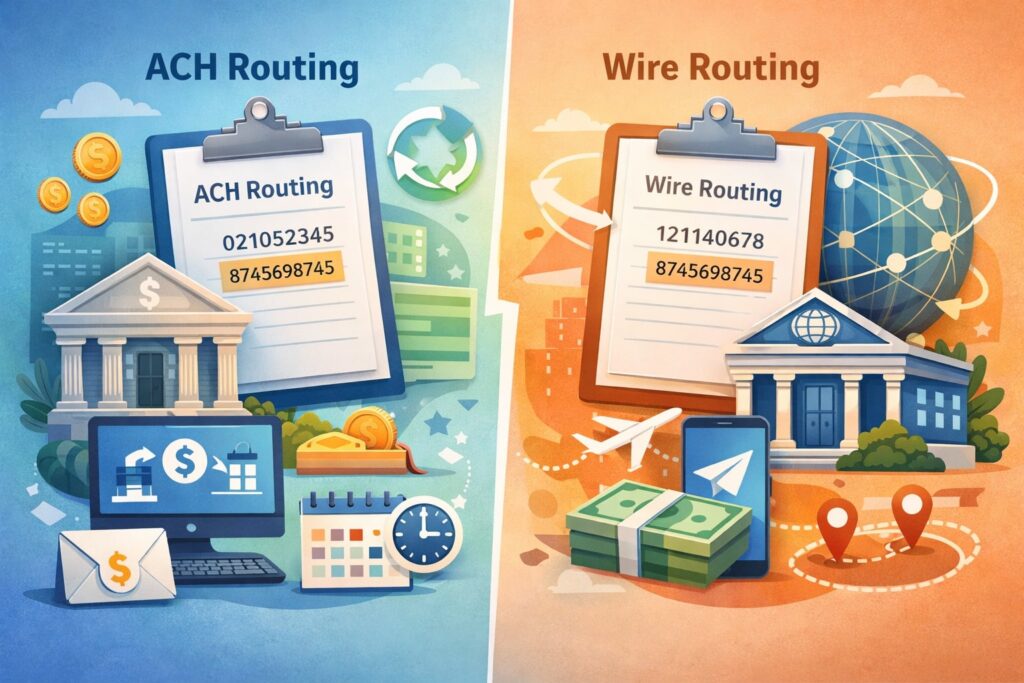
One of the most common mistakes is using a wire routing number when an ACH routing number is required (or vice versa). While both are nine digits and both are often called “routing numbers,” they do not always point to the same destination systems.
ACH routing numbers are used for transactions processed through the ACH network. Wire routing numbers are used for transfers through wire networks. Some institutions use the same number for both.
Others use different numbers to route traffic through different operational channels, especially larger institutions with multiple processing hubs.
Here’s why this matters in real life:
- A payroll provider setting up direct deposit needs Automated Clearing House routing numbers, not wire routing numbers.
- A business receiving a high-value, same-day transfer may request wire instructions, which can include a different routing number.
- A customer linking a bank account to an app may be asked for a “routing number” but the underlying flow is ACH-based, so ACH routing numbers are the correct choice.
If you’re collecting payment instructions from customers, it’s best to label the field clearly and include a short note like: “Enter your ACH routing numbers (used for direct deposit and electronic payments).” That single clarification can prevent costly returns.
Where to Find ACH Routing Numbers on Checks, Bank Statements, and Online Banking
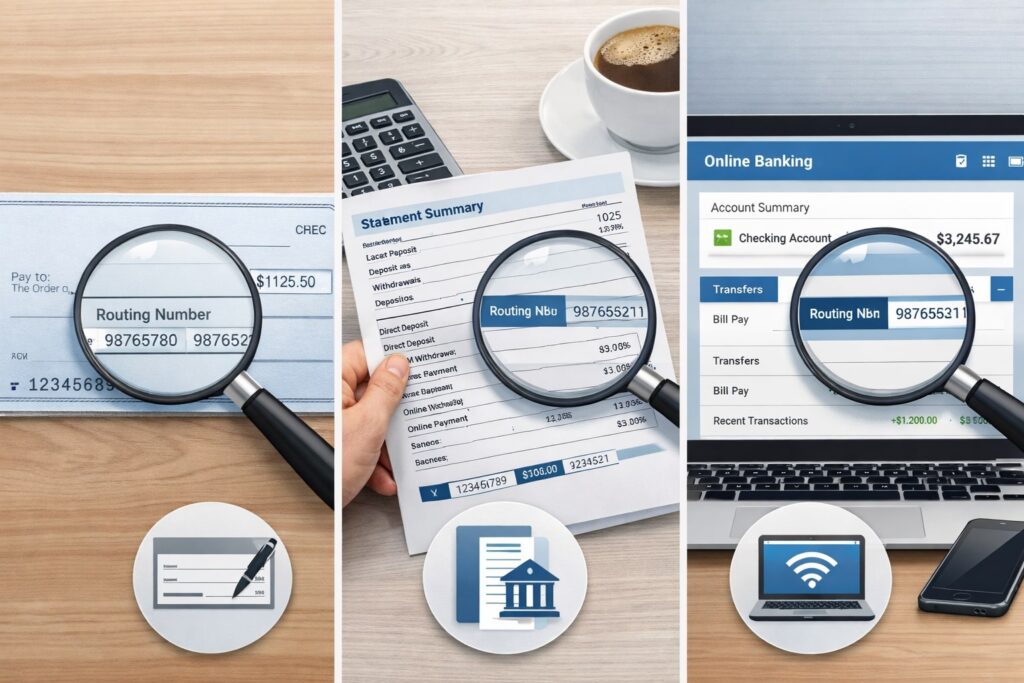
Finding ACH routing numbers is usually straightforward, but people often look in the wrong place or grab the wrong number from a wire instructions page. Below are the most common sources and how to use them safely.
On a Paper Check
Most personal and business checks display the routing number at the bottom left. It’s typically the first nine-digit sequence in the MICR line. That number is often an ACH routing number as well, but you should still confirm if your institution uses a different routing number for ACH than for checks.
In Online Banking
Many institutions show routing numbers inside the account details page. Some list multiple numbers: one for ACH/direct deposit and another for wires. Always select the one explicitly labeled for ACH or direct deposit if you’re setting up ACH routing numbers for payments.
On a Direct Deposit Form
Banks often provide a printable direct deposit form that includes ACH routing numbers and the account number. For payroll setups, this is one of the safest sources because it’s meant for ACH use.
Customer Service or Branch Support
If there’s uncertainty—especially after bank mergers—contacting support can confirm the correct ACH routing numbers for your account type and region. This is particularly useful for business accounts that may have specialized routing.
The key best practice is consistency: if your payment method is direct deposit, bill pay, or standard bank transfer, you almost always need ACH routing numbers rather than wire routing instructions.
Why Banks Have Multiple ACH Routing Numbers and How to Choose the Right One
A single institution can have several routing numbers for legitimate reasons. Understanding this prevents errors during onboarding, payroll setup, or bank verification.
Regional Processing and Legacy Systems
Large institutions may assign different routing numbers based on the state where the account was opened. This can come from historical processing regions or legacy banks acquired over time. In these cases, the correct ACH routing numbers depend on your account’s original “home” region.
Account Type Differences
Some institutions separate routing numbers by account product: consumer checking, business checking, or specialized treasury products. If your online banking shows multiple numbers, look specifically for ACH routing numbers tied to your account type.
Mergers and Transitions
After mergers, routing numbers may change slowly. Old routing numbers can continue to work for a transition period, but new accounts might use updated numbers. Businesses that store bank details should periodically re-verify ACH routing numbers for high-volume payees to reduce unexpected returns.
When in doubt, pick the routing number explicitly labeled for ACH/direct deposit in your bank portal. For businesses, providing a short “routing number guidance” tooltip reduces onboarding issues and makes ACH routing numbers collection more reliable.
ACH Routing Numbers and Account Verification: Micro-Deposits, Instant Verification, and Plaid-Style Flows
Collecting ACH routing numbers is only part of building a reliable bank payment setup. Verification is the next step: confirming the account is real and belongs to the person or business entering it.
Micro-Deposit Verification
Micro-deposits send two small ACH credits (often a few cents) to the account using ACH routing numbers and the account number. The user then confirms the deposit amounts. This proves control of the account, but it can take one to three business days depending on processing and cutoffs.
Micro-deposits remain popular because they work broadly and don’t require the user to share banking login credentials. They also create a clear audit trail.
Instant Account Verification
Instant verification methods confirm ownership by connecting through a bank login flow. These often still rely on ACH routing numbers behind the scenes, but they reduce onboarding friction by validating the account in minutes.
Hybrid Verification for Better Conversion
Many businesses offer instant verification first and fall back to micro-deposits when instant verification isn’t available. In both cases, clean, accurate ACH routing numbers reduce failures and improve successful link rates.
If you’re building an onboarding flow, consider validating ACH routing numbers format immediately, then verifying ownership via instant methods or micro-deposits. This layered approach decreases returns and improves payment reliability.
Common Mistakes With ACH Routing Numbers and How to Avoid Returned Payments
Errors with ACH routing numbers are among the top causes of failed bank transfers, especially when users type details manually. Here are the most common issues and how to prevent them.
Using a Wire Routing Number Instead of ACH Routing Numbers
This is the classic error. Fix it by labeling your form fields precisely and adding a short hint. If you’re a business, include a help link explaining where to find ACH routing numbers.
Swapped Digits or Missing Leading Zeros
Routing numbers can start with zero. If a form strips leading zeros, it can corrupt ACH routing numbers. Make sure your input fields treat routing numbers as text, not numeric values.
Copying a Routing Number From the Wrong Region
Some customers search online for their bank’s routing number and copy a general number that doesn’t match their account’s region. Encourage customers to use online banking or a direct deposit form to retrieve ACH routing numbers specific to their account.
Not Validating the Routing Number Check Digit
Systems can validate routing numbers using an established checksum calculation. While this does not guarantee the account exists, it catches many typos early. Businesses that validate ACH routing numbers at the point of entry typically reduce return rates and support tickets.
Preventing these errors improves funding speed, reduces fees, and protects customer trust—especially for payroll and time-sensitive payouts.
Security and Fraud Considerations When Sharing ACH Routing Numbers
People often worry about sharing ACH routing numbers, and the concerns are understandable. Routing numbers themselves are not secret; they appear on checks. The more sensitive piece is the account number, and the combination can be used to attempt unauthorized debits in some situations.
That doesn’t mean you should avoid ACH. It means you should treat bank details responsibly:
- Share ACH routing numbers and account numbers only with trusted businesses and secure platforms.
- Prefer portals that use encryption and tokenization rather than storing raw bank details.
- For businesses, implement access controls, audit logs, and secure storage for bank data.
- Use verification methods to reduce fraudulent bank detail entry during onboarding.
On the consumer side, monitoring account activity and using account alerts can help detect unusual ACH debits quickly. On the business side, strong onboarding controls and validation of ACH routing numbers reduce fraud attempts and lower operational risk.
Business Use Cases: Why ACH Routing Numbers Matter for Payroll, Payouts, and Subscription Billing
For businesses, ACH routing numbers are more than an onboarding field—they’re the foundation for reliable bank payments. The impact shows up in multiple workflows.
Payroll Direct Deposit
Payroll depends on accuracy and timing. If ACH routing numbers are wrong, employees can miss payday, creating immediate trust issues and support escalation. Many payroll teams reduce risk by collecting a direct deposit form or using instant verification.
Vendor and Contractor Payouts
Businesses paying vendors, marketplaces paying sellers, and platforms paying gig workers rely heavily on ACH credits. Accurate ACH routing numbers reduce payout failures, speed up settlement, and simplify reconciliation.
Subscription and Recurring Billing
Recurring ACH debits are common for rent, memberships, and B2B subscriptions. Clean ACH routing numbers reduce payment returns and prevent churn triggered by avoidable billing failures.
Refunds and Chargeback Alternatives
ACH refunds and “push-to-bank” style payouts often require ACH routing numbers. A strong data collection and validation process improves customer experience and lowers the cost of handling refunds.
In each case, investing in better routing data quality can produce measurable gains: fewer returns, fewer tickets, faster cash application, and better retention.
How to Validate ACH Routing Numbers the Right Way
Validating ACH routing numbers typically happens in layers. Each layer catches different risks.
Format Validation
Confirm the routing number is nine digits and contains only numbers. This prevents basic user errors.
Check Digit Validation
Routing numbers include a checksum that can be validated mathematically. This helps catch mistyped ACH routing numbers early. It won’t guarantee the account is open, but it significantly reduces typos.
Institution Lookup
Many payment systems cross-reference routing numbers to confirm the institution exists and supports ACH. This is especially helpful for catching routing numbers that were retired.
Ownership Verification
Micro-deposits or instant verification confirm the account belongs to the user. Even if ACH routing numbers are valid, ownership verification prevents misdirected payouts and reduces fraud.
If you’re a business, combining these methods yields the best results. If you’re a consumer, the main takeaway is simple: always pull ACH routing numbers from a reliable source like online banking or a direct deposit form, not a random search result.
ACH Routing Numbers in Payment Ops: Returns, NOCs, and Why Accuracy Affects Cash Flow
ACH processing includes feedback mechanisms that help correct data issues. Two important concepts are returns and notifications of change (NOCs). Both are directly tied to ACH routing numbers and account information quality.
Returns
A return happens when the receiving institution cannot process the entry. Common reasons include invalid account number, closed account, or incorrect routing. When ACH routing numbers are wrong, returns increase, which can lead to fees, delays, and customer friction.
Notifications of Change (NOCs)
An NOC is a message indicating that bank information should be updated—often a corrected account number or corrected ACH routing numbers due to account changes or bank mergers. Businesses that monitor and apply NOCs reduce future failures and improve long-term payment success.
Cash Flow Impacts
Returns delay cash collection and can distort forecasting. For payroll and payouts, they create operational emergencies. That’s why improving ACH routing numbers accuracy at onboarding is one of the simplest ways to strengthen payment operations.
Future Outlook: Will ACH Routing Numbers Still Matter as Faster Payments Expand?
Payment technology evolves quickly, and faster payment systems are becoming more common. That raises a fair question: will ACH routing numbers become less important over time?
In the near and medium term, ACH routing numbers are likely to remain widely used because:
- ACH is deeply embedded in payroll, bill pay, and B2B workflows.
- Businesses have mature reconciliation processes built around ACH files and reporting.
- Many consumers and small businesses prefer bank transfers for lower fees than cards.
However, the way ACH routing numbers are used may change. Expect these trends:
More Tokenization and Less Manual Entry
More platforms will hide raw bank details and store tokenized credentials. Users may see fewer forms asking for ACH routing numbers directly, even though the routing still exists behind the scenes.
More “Instant” Experiences Over the Same Rails
Bank verification and funding experiences will feel faster. Even when ACH remains the settlement rail, upfront verification can happen instantly, and risk controls can allow immediate access to funds.
Gradual Shift of Certain Use Cases to Faster Rails
Some urgent payments—like insurance disbursements or last-minute payroll corrections—may increasingly use instant methods when available. But ACH will likely remain the default for recurring, predictable flows, keeping ACH routing numbers relevant for the foreseeable future.
The future prediction is not that ACH routing numbers disappear, but that users interact with them less directly while businesses and payment platforms continue relying on them for routing and settlement.
FAQs
Q.1: What are ACH routing numbers used for?
Answer: ACH routing numbers are used to route electronic bank payments such as direct deposit, recurring bill payments, subscription debits, and vendor payouts. They identify the receiving financial institution so the ACH system can deliver the transaction correctly.
Q.2: Are ACH routing numbers the same as routing numbers on checks?
Answer: Often they are the same, but not always. The routing number on a check is frequently valid for ACH, yet some institutions have separate numbers for wires or different regions. When setting up electronic payments, use the number labeled for ACH/direct deposit to ensure you’re using ACH routing numbers correctly.
Q.3: Can a bank have more than one ACH routing number?
Answer: Yes. A bank can have multiple ACH routing numbers due to regional processing, legacy mergers, or product differences. Always confirm which routing number applies to your specific account.
Q.4: What happens if I enter the wrong ACH routing numbers?
Answer: If ACH routing numbers are wrong, the transfer can be returned, delayed, or fail verification. In payroll or payouts, this can delay funds. In recurring billing, it may cause a missed payment and fees. Using validation and pulling routing details from reliable sources reduces the risk.
Q.5: Are ACH routing numbers safe to share?
Answer: ACH routing numbers alone are not highly sensitive because they are publicly visible on checks. The risk increases when combined with an account number. Share full bank details only with trusted parties and secure platforms, and monitor your account activity.
Q.6: How do businesses reduce ACH returns related to routing?
Answer: Businesses reduce failures by validating ACH routing numbers format and checksum, confirming the institution supports ACH, and verifying account ownership through micro-deposits or instant verification. Clear form labeling also prevents users from entering wire routing numbers by mistake.
Conclusion
ACH routing numbers are a foundational element of modern bank payments. They ensure electronic transactions—like direct deposit, bill pay, subscriptions, and business payouts—reach the correct financial institution so funds can be posted to the right account.
While they may look like a simple nine-digit number, ACH routing numbers carry real operational weight: a single digit error can cause returns, delays, customer frustration, and added costs.
For individuals, the key habits are straightforward: retrieve ACH routing numbers from reliable sources like online banking or a direct deposit form, double-check for leading zeros, and confirm you’re not using wire instructions when setting up ACH payments.
For businesses, accuracy and verification are strategic advantages. Validating ACH routing numbers at entry, monitoring NOCs, and adopting strong account verification flows can reduce payment failures and strengthen cash flow.
Looking ahead, bank payments will keep getting faster and more user-friendly, but ACH routing numbers are likely to remain part of the underlying infrastructure for years—especially for recurring payments, payroll, and high-volume disbursements.
Even as platforms move toward tokenization and instant onboarding, understanding ACH routing numbers will continue to help users and businesses avoid errors, reduce risk, and keep money moving smoothly.
Leave a Reply