By Rinki Pandey January 13, 2026
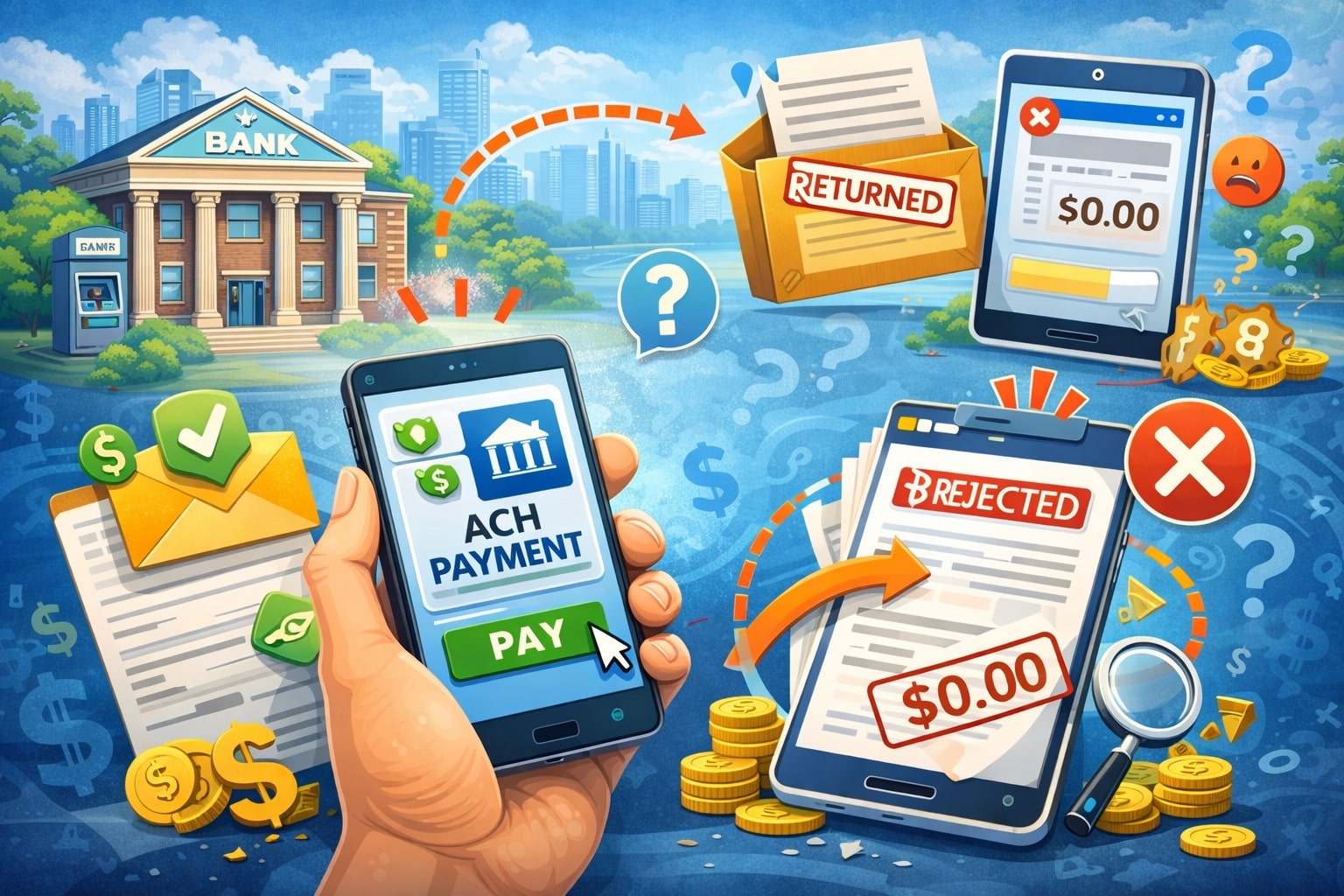
A return mobile ACH payment means a mobile-initiated bank-to-bank transfer (sent through the ACH network) did not settle successfully and was sent back by the receiving bank to the sending bank.
In simpler terms, the payment tried to move money from one bank account to another using an app, mobile site, or mobile wallet experience—and the banking system rejected it, so the transaction “returns” with a specific reason code.
A return mobile ACH payment can happen in many everyday scenarios: a customer pays a bill in a mobile app, a gig worker cashes out to a bank account from a phone, or a merchant collects an eCheck on a mobile checkout page.
The experience looks instant on the screen, but ACH is a batch-based system with rules, settlement timelines, and verification steps. If something doesn’t match—like the account is closed, the routing number is wrong, or authorization is missing—the receiving bank can reject the entry and send it back as a return mobile ACH payment.
This matters because a return mobile ACH payment isn’t just a “failed payment.” It carries operational tasks (reconciliation, customer outreach, reattempt decisions), risk signals (possible fraud or account abuse), and compliance implications (proof of authorization, consumer protections, dispute handling).
Understanding why returns happen and how to reduce them helps businesses protect cash flow, reduce fees, and improve customer experience—especially when payments start on mobile, where data-entry errors and identity risks can be higher.
Understanding Mobile ACH Payments
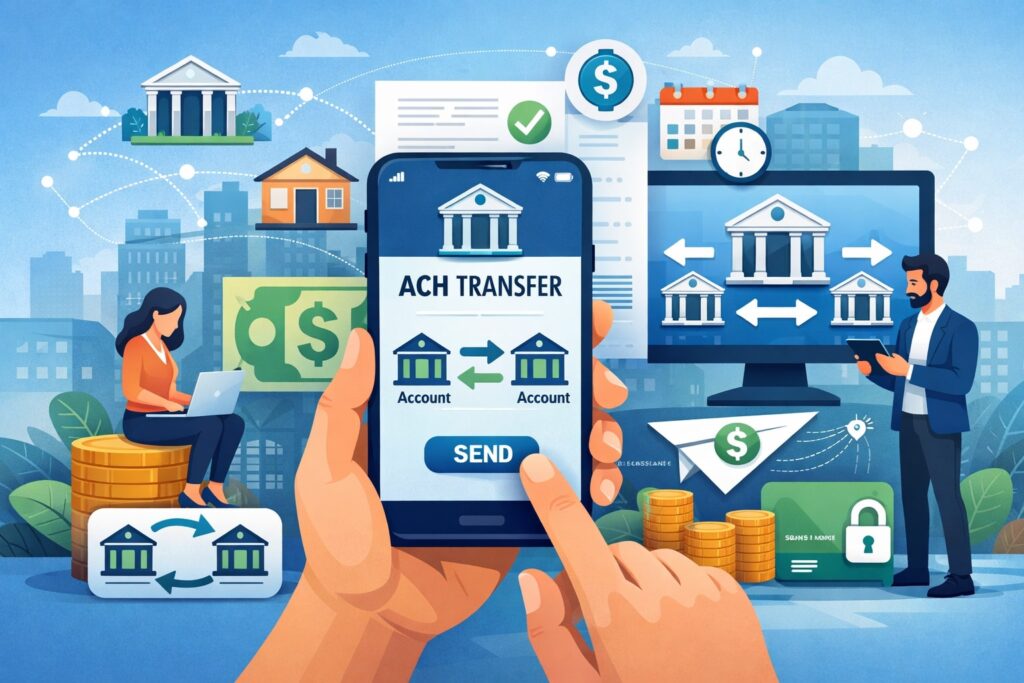
Mobile ACH payments are ACH transfers that are initiated via a mobile device—but processed under the same ACH rails used for many bank account transfers. When a customer authorizes a debit (pulling funds from their account) or a credit (pushing funds to their account), the app or mobile checkout triggers an ACH entry that follows standard network rules and bank processing steps.
A mobile ACH flow often feels fast because the user experience is streamlined: saved bank details, instant identity checks, biometric login, and prefilled forms. But behind the scenes, the ACH network still processes entries in batches and in specific windows.
That gap between “tap to pay” and “actual settlement” is one reason a return mobile ACH payment can surprise both customers and businesses.
Mobile initiation also changes risk patterns. Typing account numbers on a small screen increases mistakes. Mobile account takeovers can increase unauthorized attempts. And app-based payments often encourage frequent micro-transactions, which can raise return volume if verification and authorization controls aren’t strong.
For merchants, fintech apps, marketplaces, and subscription businesses, mobile ACH can be a powerful tool—but it must be managed with return prevention in mind so a return mobile ACH payment doesn’t become a recurring cost center.
What ACH actually is (and what it isn’t)
ACH (Automated Clearing House) is a system that moves money between bank accounts using standardized electronic entries. ACH is commonly used for payroll deposits, bill payments, subscriptions, and many “bank transfer” payments that don’t require a card. ACH is not a card network, and it is not a wire. That distinction matters because return rules and timing differ.
ACH transfers generally fall into two categories: ACH debits (money pulled from a customer’s account, like an eCheck) and ACH credits (money pushed to a customer’s account, like payouts).
A return mobile ACH payment can apply to both, but the most common returns show up on ACH debits because the receiving bank (the customer’s bank) may reject the debit for insufficient funds, closed account, or unauthorized reasons.
ACH entries include specific data fields: routing number, account number, transaction code (checking/savings), amount, and company identifiers. If any field is wrong or fails bank validation, the entry may not post and can come back as a return mobile ACH payment. ACH is reliable and cost-effective, but it is rule-driven, and those rules are central to understanding returns.
What makes it “mobile” in a mobile ACH payment?
“Mobile” describes how the payment starts, not the payment rail itself. A mobile ACH payment is still an ACH transfer; it’s simply initiated by a mobile app or mobile-friendly checkout. This could be a consumer paying a utility bill in an app, a donor giving through a mobile donation page, or a small business sending payouts via a mobile dashboard.
Mobile environments often add layers like instant account verification, tokenized bank details, or API-based processors that submit entries to banks. Even with these enhancements, a return mobile ACH payment can occur because the receiving bank remains the final gatekeeper.
If the bank can’t post the transaction or believes the entry violates rules (for example, wrong account type or invalid account number), it will return the entry.
Mobile also influences user behavior. People move quickly on phones, copy/paste numbers, switch between apps, or rely on autofill. These conveniences can introduce mismatch errors. That’s why businesses that heavily use mobile ACH should treat return mobile ACH payment prevention as part of product design, not just a back-office issue.
Definition of a Return in Mobile ACH
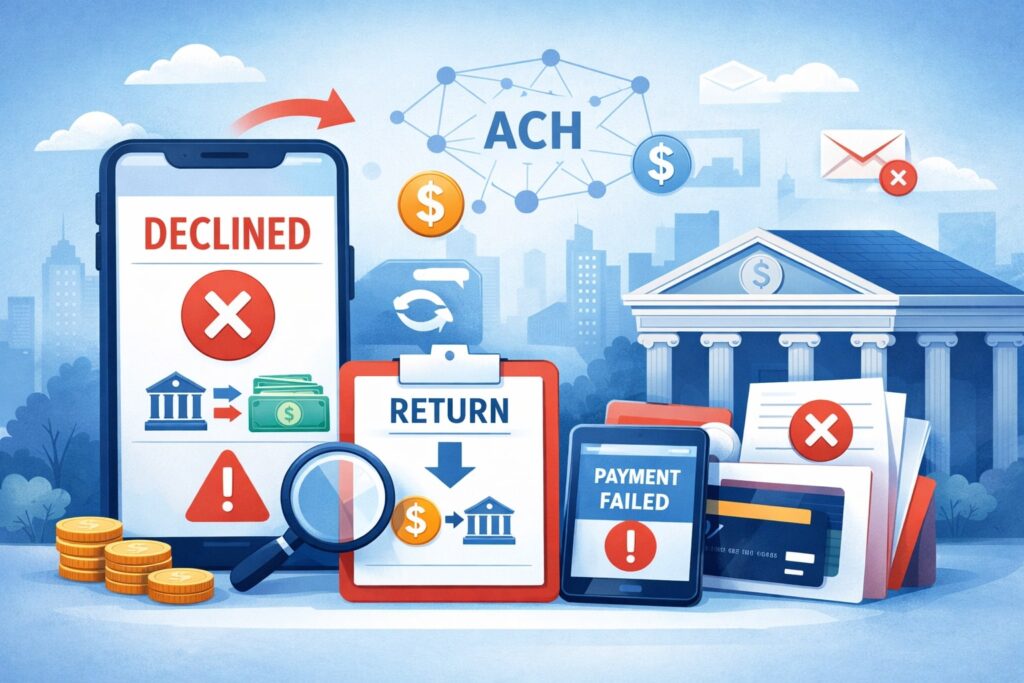
A return is the formal ACH mechanism for rejecting an entry after it has been submitted for processing. When a bank returns an ACH entry, it attaches a standardized return reason code and sends the entry back through the ACH network to the originating side.
In a return mobile ACH payment scenario, the initiation happened on mobile, but the return is a banking-network event driven by ACH rules.
It’s helpful to think of returns as “structured rejections.” They are not vague failures. They come with a specific code that tells you why the entry couldn’t be posted or accepted. That code determines what you can do next: whether you can reattempt, whether you need new authorization, how quickly you must respond, and what documentation you should keep.
Businesses often discover a return mobile ACH payment in their processor dashboard or reporting files. The original transaction may have shown as “pending” or even “completed” at first—especially if the app provided an optimistic status.
But when the receiving bank returns it, the status changes and funds may be reversed from the merchant’s balance or never credited in the first place. This is why returns are deeply tied to reconciliation and cash flow forecasting.
Return vs. reversal: why the words matter
A return is initiated by the receiving bank under ACH rules using return codes. A reversal is initiated by the originating side to correct an error, typically under specific circumstances (like wrong amount or duplicate entry) and within a limited timeframe. These are not interchangeable.
In practice, a return mobile ACH payment usually means the receiving bank rejected the entry. A reversal is the sender admitting something went wrong and attempting to unwind it. Confusing the two can create compliance risk.
For example, if you treat an unauthorized return like a simple retry scenario, you might violate authorization rules or create a bad customer experience.
Operationally, returns usually show up because of account status, funds availability, authorization problems, or invalid data. Reversals show up because your system made a mistake. When your team sees a return mobile ACH payment, the first step is to read the return code and determine whether it’s a retry-eligible issue (like insufficient funds) or a “stop and fix” issue (like unauthorized or invalid account).
The role of return codes in a return mobile ACH payment
ACH returns use standardized codes (commonly labeled R01, R02, etc.). Each code maps to a defined reason, and many have rules about timing. For example, a return due to insufficient funds has different handling expectations than a return due to unauthorized debit.
For businesses, return codes are more than labels—they’re decision triggers. A return mobile ACH payment with a funds-related code might justify a smart retry strategy. A return mobile ACH payment with an authorization-related code typically requires you to stop debiting and obtain new permission, plus keep proof of authorization.
Return codes also feed risk analytics. If your mobile ACH channel suddenly spikes in returns tied to invalid account details, you may have a UX issue or a bot problem. If returns spike for unauthorized reasons, you may have an identity verification or account takeover issue. Treat return codes as both operational data and risk signals.
Common Return Codes You’ll See for Mobile ACH Payments
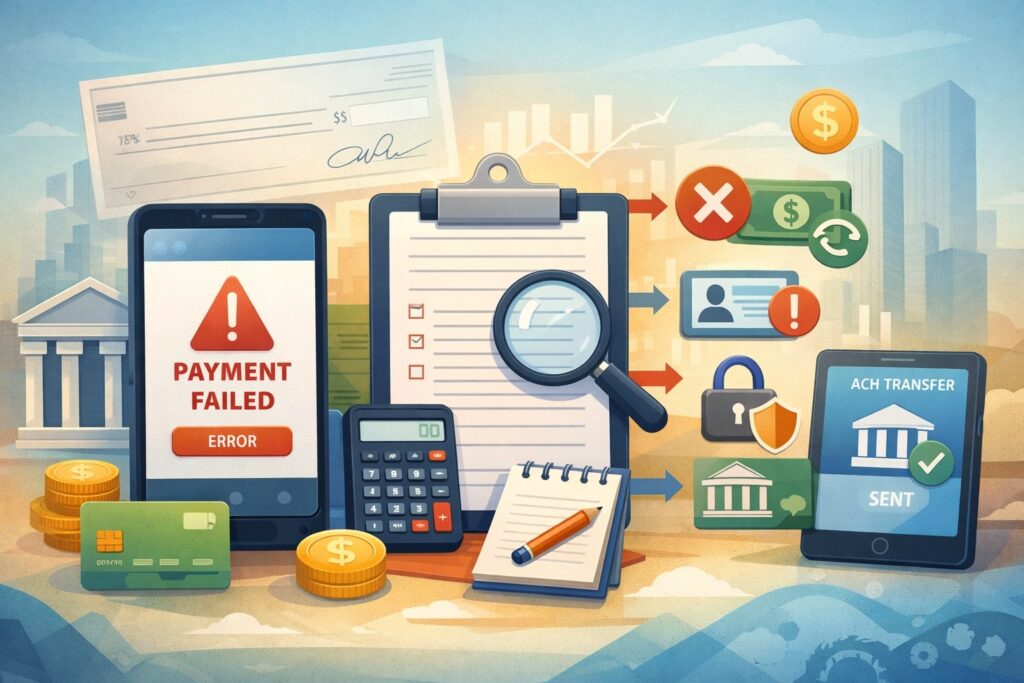
A return mobile ACH payment usually arrives with a code that explains what happened. Understanding the most common ones helps you respond correctly and reduce repeat failures. While there are many return codes, a small set typically accounts for most volume in mobile-initiated ACH debits.
The most common return families include: funds issues, account status issues, data issues, and authorization issues. Each category requires a different playbook. A good rule: never rely on guesswork. The code is the truth of the banking result—even if the customer claims something else.
Below are codes businesses frequently encounter in a return mobile ACH payment context. Use them to guide your next step: retry, update banking details, request a different payment method, or collect fresh authorization.
R01 (Insufficient Funds) and what it implies on mobile
R01 is the classic “insufficient funds” scenario. The receiving bank couldn’t post the debit because the available balance wasn’t enough. In a mobile setting, this often occurs when customers schedule payments quickly, assume a paycheck has posted, or move funds between accounts after initiating a payment.
A return mobile ACH payment with R01 is usually a cash flow timing problem rather than a data problem. Many businesses choose to retry, but retries should be controlled. Too many retries can frustrate customers, increase fees, and raise risk flags. A smart approach is to retry once or twice, spaced out, and notify the customer in plain language.
It also helps to provide payment timing transparency inside the app. If users understand that ACH isn’t truly instant and that their balance needs to cover the debit on processing day, returns can drop. R01 is common, manageable, and often preventable with better user communication and balanced retry logic.
R02 (Account Closed) and why retries usually fail
R02 indicates the account is closed. In mobile onboarding, users sometimes link an old account or type details from memory. When the bank sees the account is no longer active, it rejects the entry.
A return mobile ACH payment with R02 is typically not retry-friendly. Retrying the same details rarely works because the underlying problem is the account’s status. The correct resolution is to collect new bank details, encourage bank relinking, or offer an alternate method.
R02 can also be a risk signal if it appears repeatedly across many users, suggesting low-quality data entry or attempted fraud. To reduce R02 returns, consider account verification methods that confirm the account is open and eligible before you initiate high-stakes debits, especially for first-time mobile ACH users.
R03 (No Account / Unable to Locate Account)
R03 means the account number doesn’t exist or can’t be found. This is common when digits are transposed, a savings account is entered as checking, or the user pasted the wrong number. On mobile, small-screen input makes these mistakes more likely.
A return mobile ACH payment with R03 points to a data integrity failure. Retrying without correcting the details usually repeats the return. The best fix is to implement bank account validation: format checks, routing number validation, and ideally real-time account verification through a trusted method.
From a customer support standpoint, R03 is sensitive. Users may feel blamed. Good messaging focuses on “bank details didn’t match what the bank expected” and offers a fast way to update the information. Reducing R03 returns improves both approval rates and customer trust.
R04 (Invalid Account Number) vs R03 in practice
R04 is similar to R03 but often indicates the account number format is invalid. Banks differ in how they apply R03 vs R04. Operationally, treat both as “fix the account details.”
A return mobile ACH payment with R04 should trigger a bank detail review flow. Encourage users to relink via secure verification or re-enter details carefully. Adding simple UX protections—like masking, confirmation prompts, and “retype account number” fields—can reduce these errors without making the mobile experience feel heavy.
Both R03 and R04 benefit from front-end validation and back-end screening. If your return mobile ACH payment reports show these codes rising, it’s a strong sign your mobile form design or verification method needs improvement.
R10 / R11 / R29 (Authorization-related returns)
Authorization-related returns are among the most important. Codes like R10 (often tied to customer advising not authorized) and related codes signal that the customer’s bank believes the debit was not properly authorized or is being disputed.
A return mobile ACH payment in this category is not just a failed payment—it’s a compliance and risk event. Retrying can make things worse. Instead, pause debits, review your authorization record, and contact the customer with a dispute-friendly, respectful message.
Mobile flows sometimes bury authorization language behind small links or unclear checkboxes. If you’re seeing these returns, strengthen your consent capture: clear disclosure, affirmative action, and stored evidence (timestamp, IP/device, authorization language, and scope). Strong authorization practices reduce returns and protect your business if a dispute escalates.
Why Return Mobile ACH Payments Happen
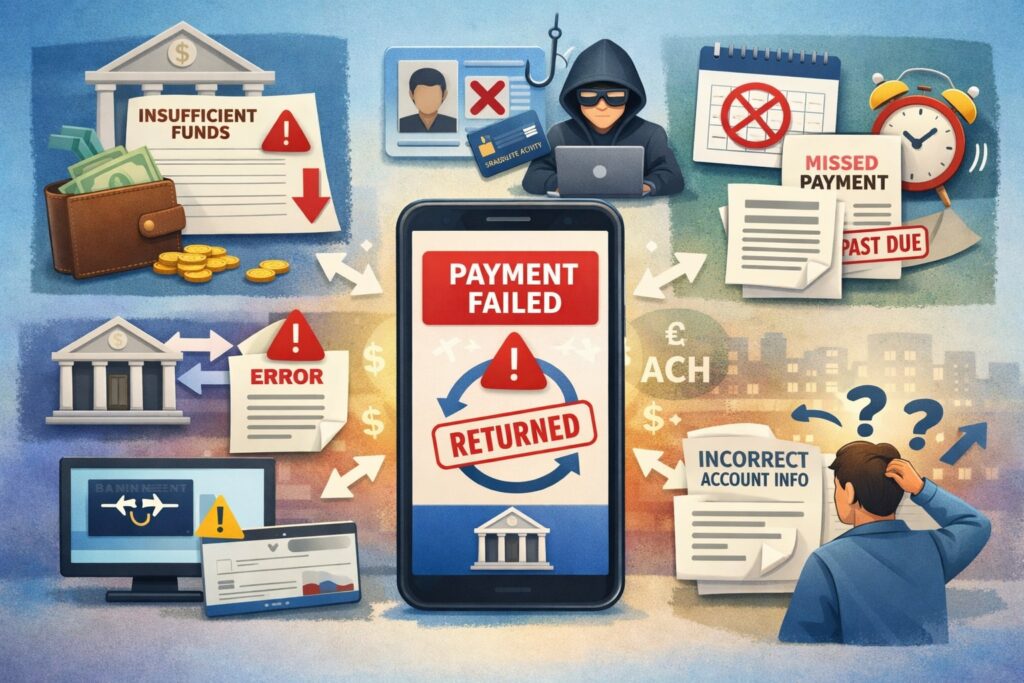
A return mobile ACH payment can be triggered by a mix of customer behavior, bank validation rules, and business process choices. Many businesses assume returns are mostly “insufficient funds,” but real-world return patterns often show multiple causes—especially when the channel is mobile.
Mobile introduces unique friction points: typos, fast onboarding, device sharing, and account linking churn. Some users link accounts they rarely fund. Others switch banks but forget to update details.
And some bad actors try random account numbers at scale, hoping something works. Banks respond by returning entries with codes that protect the account holder and keep the network clean.
Returns also happen when businesses move too quickly. If you debit before verification finishes, if you don’t confirm authorization quality, or if you retry too aggressively, your return mobile ACH payment rate can rise. That can increase processing costs and may threaten approval with partners or providers.
Understanding why returns happen is the foundation for preventing them. The good news: most causes are measurable and fixable. If you categorize returns, tie them to funnel steps, and adjust verification and messaging, you can usually reduce return mobile ACH payment volume significantly.
Data entry mistakes and mobile UX friction
On mobile, users type routing and account numbers on small keyboards. Autocorrect can interfere. Copy/paste can include hidden spaces. Screenshots and manual transcription create errors. All of these can lead to invalid account returns.
Even small UX choices matter. If your form doesn’t clearly label checking vs savings, you’ll see returns. If you don’t confirm account number twice, you’ll see returns. If you don’t provide a secure bank-linking option, you’ll see returns. A return mobile ACH payment caused by data errors is often preventable through better design.
The key is to reduce “free typing.” Use bank linking where possible. Add validation. Provide friendly error messages before submission. The goal is to catch issues upstream so they don’t become a return mobile ACH payment after you’ve already counted on settlement.
Timing gaps between authorization and settlement
ACH processing runs on schedules. Users may authorize a payment at night or on a weekend, but the debit posts later. During that gap, their balance can change. They might spend money, move funds, or have other debits clear first. That leads to insufficient funds returns.
This timing gap is more noticeable in mobile because the experience feels immediate. A user taps “Pay now” and expects “now.” If your app doesn’t explain processing timing, your return mobile ACH payment rate may climb from misunderstanding alone.
Businesses can reduce timing-based returns by offering “pay on payday” scheduling, showing estimated debit dates, and sending reminders before the actual debit. Clear expectations can turn many returns into successful payments.
Authorization quality and disputes
In mobile flows, authorization is often captured via checkbox and terms. If the language is unclear, if consent isn’t affirmative, or if the customer doesn’t remember agreeing, disputes become more likely.
A return mobile ACH payment related to authorization is expensive in time and trust. It can create chargeback-like workflows, escalate support cases, and harm customer lifetime value. The best defense is strong consent capture, accessible receipts, and easy-to-find payment history that helps customers recognize legitimate transactions.
If your business model uses recurring debits, ensure your mobile UI clearly explains the cadence, amounts, and cancellation method. Confusion is a leading cause of “not authorized” claims even when the business intended to do the right thing.
How the Return Process Works End-to-End
A return mobile ACH payment follows an established chain of participants and file exchanges. Even though APIs and modern dashboards make it feel digital and instant, it still depends on banks and network schedules.
At a high level, your system or payment provider submits an ACH entry through a sending bank. The entry is delivered through the ACH network to the receiving bank. If the receiving bank can’t post it or determines it should not be accepted, it sends a return entry back with a return code. Your provider then updates reporting and adjusts balances.
This process matters because it defines how quickly you learn about the return mobile ACH payment, what documentation you may need, and how soon you can take action. It also affects customer messaging—telling a customer “it failed instantly” may be inaccurate, and inaccurate messaging creates distrust.
Good operations teams treat returns as a normal lifecycle stage, not an exception. They monitor return rates, segment by reason codes, and integrate return handling into support, risk, and accounting workflows.
The key parties involved in a return mobile ACH payment
Several roles appear in ACH processing:
- Originator: the business initiating the debit or credit (you).
- ODFI (Originating Depository Financial Institution): the sending bank that originates entries into the network.
- RDFI (Receiving Depository Financial Institution): the receiving bank that holds the customer’s account.
- Receiver: the customer whose account is credited or debited.
- Third-party sender / processor: a service provider that helps create, format, and submit entries.
In a return mobile ACH payment, the RDFI sends the return back through the network to the ODFI, typically through the same pathways. The return code comes from the RDFI, and banks take these codes seriously because they signal account conditions and consumer protections.
Knowing these roles helps your team route issues correctly. A customer may call you, but the bank is the one returning. Your job is to translate the return code into actionable next steps and resolve the root cause.
Timelines and return windows (why “late” returns happen)
Return timing varies by code. Some returns happen quickly (like invalid account). Others can appear later (like certain unauthorized claims). That’s why a return mobile ACH payment can show up after you thought the payment “cleared.”
Operationally, you should treat ACH settlement as final only after you’re past the relevant return risk window for your use case. Many businesses implement risk holds, delayed fulfillment, or staged access until the risk of return drops.
If you deliver goods instantly on a first-time mobile ACH debit, you take more exposure. If you wait until verification is strong or payment history is established, you reduce the impact of a return mobile ACH payment. This is less about distrust and more about practical risk management.
How returns appear in dashboards and reconciliation
Most providers show returns in reporting panels with the return code, date, and the original transaction reference. Your accounting team should reconcile returns daily or at least several times per week, because return mobile ACH payment events affect revenue recognition, customer balances, and collections.
A clean reconciliation process ties:
- original payment ID
- settlement date
- return date
- return code
- fees
- customer communications
If you don’t connect these dots, you’ll end up with confusing support tickets and mismatched ledger entries. Returns are manageable when they’re integrated into your operational “source of truth.”
Impact of Return Mobile ACH Payments on Businesses
A return mobile ACH payment has direct financial impact and indirect operational impact. Financially, you may lose the expected funds and incur return fees. Operationally, you may spend time on customer outreach, support, and risk review. Strategically, high return rates can affect provider relationships and approval decisions.
Returns also distort growth metrics. If you count initiated payments as “revenue,” returns later make your numbers look unstable. For subscription businesses, returns increase involuntary churn. For marketplaces, they interrupt payouts and can frustrate sellers. For billers, they reduce on-time collections and increase call volume.
The key is to treat return mobile ACH payment management as a core capability: prevention, detection, response, and continuous improvement. When you do, returns become an expected cost with controlled boundaries—not a surprise that disrupts operations.
Fees, costs, and hidden operational friction
Many providers and banks assess fees for returned ACH entries. Even when the fee is small, it adds up with volume. There are also hidden costs: staff time, customer support tickets, and engineering cycles spent on edge cases.
A return mobile ACH payment can also create downstream costs like re-shipping holds, service interruptions, or collection agency involvement. If your mobile channel has high returns, you might also see higher fraud screening costs or stricter limits from partners.
Reducing return rates often has an outsized ROI. Small improvements in account verification, authorization capture, and retry strategy can cut return mobile ACH payment volume and improve unit economics.
Cash flow and fulfillment risk
If your business fulfills before settlement confidence is high, a return mobile ACH payment can become a loss. This is especially risky for digital goods, instant services, and same-day delivery.
To manage this, businesses commonly implement:
- first-payment holds or delayed access
- step-up verification for large amounts
- tiered limits for new users
- split fulfillment (partial deliver now, full deliver after risk window)
The goal is not to punish customers. It’s to align fulfillment timing with settlement certainty so a return mobile ACH payment doesn’t turn into unrecoverable loss.
Risk signaling and provider relationships
Return rates are monitored. Providers and banks care about network quality. If your return mobile ACH payment rate is high, it can indicate poor underwriting, weak authorization practices, or fraud exposure.
That can lead to increased reserves, stricter limits, or even termination in extreme cases. The healthiest approach is proactive: track returns by code, by cohort, by onboarding channel, and by device risk signals. When you can explain and reduce returns, you look like a reliable operator—and reliability is valuable in payments.
What Customers Experience When a Mobile ACH Payment Is Returned
From the customer’s point of view, a return mobile ACH payment is confusing because it often arrives after the “payment successful” moment. They might see a status change inside the app, a bank notification, or a negative balance event if they assumed the payment was completed.
Customers may also experience fees from their bank, though that depends on bank policies and account settings. More commonly, they experience the inconvenience: a bill not paid, a subscription paused, or a service interrupted.
The customer experience you provide during a return matters. A clear explanation, a quick resolution path, and respectful language can turn a potentially angry interaction into a trust-building moment. On the other hand, vague messages like “payment failed” with no next step can create churn.
A strong approach is to explain what “returned” means in plain language, state the most likely cause without accusing, and offer options: update bank details, choose a different account, use another payment method, or retry on a specific date.
How to explain a return without sounding accusatory
A good message avoids blame and focuses on facts. For example:
- “Your bank wasn’t able to complete this bank transfer and sent it back.”
- “The bank reported that the account details didn’t match.”
- “The bank reported insufficient funds at the time the transfer processed.”
This kind of language acknowledges the return mobile ACH payment as a bank decision, not a customer failure. It also gives the customer dignity and reduces support friction.
If the return is authorization-related, be especially careful. Provide a path to review authorization, show transaction history, and offer support. Customers often respond well when they feel heard and when the process is transparent.
The importance of self-serve fixes in mobile
Mobile users expect fast resolution. If a return mobile ACH payment requires a phone call, friction rises and collections drop. Strong mobile experiences offer:
- instant bank relinking
- easy account update flows
- clear retry scheduling
- alternative payment methods
- in-app support chat or quick email option
When customers can fix the issue in under a minute, return-related churn drops. This is one of the best reasons to invest in return-aware mobile UX.
How to Reduce Return Mobile ACH Payment Rates
Reducing return mobile ACH payment volume is about prevention and smart handling. You can’t eliminate all returns—funds issues will always exist—but you can significantly reduce preventable returns tied to invalid accounts, authorization confusion, and poor retry behavior.
Start by measuring your returns properly. Track return rate by transaction type (debit vs credit), by user cohort (new vs established), by entry method (manual entry vs bank link), and by return code. The pattern will tell you where to focus.
Then implement layered controls: better data capture, better verification, clearer authorization, and thoughtful retries. The best programs combine product UX improvements with risk rules and customer communication.
Bank account verification that actually prevents returns
Verification can be light or strong. Light methods include format checks and routing number validation. Strong methods include real-time account verification through secure linking, which can confirm ownership and account status.
The more you rely on manual entry, the more you’ll see return mobile ACH payment codes tied to invalid accounts. Secure bank-link flows reduce typo-driven returns and can also reduce unauthorized disputes by confirming identity and account control.
For high-risk scenarios—large first-time debits, high-frequency usage, or high fraud pressure—use stronger verification. For low-risk scenarios, a balanced approach may be enough. The point is to match verification strength to risk so you reduce returns without wrecking conversion.
Authorization best practices for mobile ACH debits
Authorization is the heart of ACH debits. On mobile, keep it clear and affirmative:
- use a visible checkbox (not pre-checked)
- summarize what the customer is agreeing to (amount, timing, recurrence)
- provide a link to full terms, but don’t hide key language there
- store evidence (timestamp, device info, IP, version, text shown)
- send a confirmation receipt that includes the authorization summary
When authorization is clear, customers are less likely to dispute. That reduces authorization-related return mobile ACH payment events and improves trust. It also helps your compliance posture because you can produce proof if required.
Smart retry strategy without creating more damage
Retries can recover funds-related returns, but they must be controlled. A common approach is:
- retry once after a short delay
- retry again closer to typical pay cycles
- stop after a small number of attempts
- notify the customer before each retry
- offer self-serve scheduling or alternate methods
Avoid “machine gun” retries. Excessive retries can trigger more fees and frustrate customers. If a return mobile ACH payment is due to invalid account details or closed account, do not retry—fix the details first.
A strong retry policy improves recovery while keeping customer experience respectful.
How to Handle Return Mobile ACH Payments Operationally
Even with prevention, you’ll still see returns. The difference between high-performing teams and struggling teams is the quality of their return handling process.
Operational handling includes: triage by return code, automatic customer notifications, support scripts, retry or closure decisions, and accounting reconciliation. It also includes feedback loops to product and risk teams so the same issues don’t repeat.
A return mobile ACH payment is best handled quickly. Delays increase customer confusion and reduce collection recovery. Fast handling also reduces the chance that a customer “double pays” using another method because they didn’t realize the ACH was returned.
Your goal is to turn returns into predictable workflows that are measured and continuously improved.
Triage playbooks based on return reason
A practical way to manage returns is to group codes into action categories:
- Retry-eligible (funds-related): attempt controlled retries, notify customer
- Fix-required (invalid/closed account): ask customer to update details, stop retries
- Authorization-risk (unauthorized disputes): stop debits, review authorization evidence, support-driven resolution
- Banking/administrative issues: request new details or alternate method
This prevents inconsistent handling. If your support team treats every return mobile ACH payment the same way, you’ll either retry when you shouldn’t or stop collections when you could recover successfully.
Customer communication that reduces churn
Returns create emotion. Customers worry about access, fees, and trust. Your communication should:
- explain “returned” in plain language
- include the date and amount
- include the next step (retry date or update link)
- offer alternatives
- provide support options
Avoid technical jargon unless the user asks for it. If you mention a return code, explain what it means. Transparent communication reduces disputes and can even reduce future return mobile ACH payment volume because customers learn what to expect.
Reconciliation and ledger hygiene
From an accounting perspective, a return mobile ACH payment must be tied to the original entry. This ensures you don’t misstate revenue or customer balances.
A clean process includes:
- daily import of return reports
- automated matching to original transaction IDs
- clear fee tracking
- customer balance adjustments
- notes for support and collections
When reconciliation is reliable, you reduce internal confusion and shorten resolution time. That improves both customer experience and financial accuracy.
Compliance, Rules, and Risk Considerations
Return mobile ACH payment management sits at the intersection of network rules, consumer protections, and fraud controls. Businesses need to maintain strong authorization records, apply reasonable risk checks, and respond appropriately to disputed transactions.
ACH is rule-driven. Banks and networks expect consistent handling of returns and proper use of codes and retries. Poor practices can lead to elevated scrutiny. For mobile-first businesses, compliance also includes data privacy, secure storage of bank information, and careful handling of customer identity signals.
In many cases, your payment provider helps with formatting and reporting, but the business still owns key responsibilities: getting valid authorization, keeping records, and ensuring communications are not misleading.
Authorization records and documentation
If a customer disputes an ACH debit as unauthorized, you may need to produce proof of authorization. That’s why your mobile consent capture must be designed for evidence:
- what text was shown
- what the user clicked
- when it happened
- device and session details
- recurrence terms and cancellation method
This evidence helps resolve return mobile ACH payment disputes and prevents repeated unauthorized return events. It also encourages better internal discipline: if you know you must prove it, you design authorization more clearly.
Fraud patterns specific to mobile ACH
Mobile channels face threats like account takeover, synthetic identities, and scripted attempts using stolen bank details. These threats can inflate return mobile ACH payment counts, especially unauthorized and invalid-account returns.
Risk controls that help include:
- device fingerprinting and velocity limits
- onboarding friction for risky profiles
- name-to-account matching where available
- strong customer authentication
- limits on first-time debits and rapid retries
The goal is to reduce returns by preventing bad entries from entering the ACH stream in the first place.
Key Terms Related to Return Mobile ACH Payments
To manage return mobile ACH payment issues confidently, it helps to understand the language used by banks and processors. These terms show up in dashboards, reports, support tickets, and compliance reviews.
A few definitions can prevent costly misunderstandings. For example, “return” is not the same as “chargeback,” and “reversal” is not the same as “refund.” ACH has its own vocabulary and timing rules. When your team uses the correct terms, it’s easier to create accurate policies and communicate clearly with customers and partners.
Below are common terms you’ll see around a return mobile ACH payment event. Keep these definitions aligned across operations, support, finance, and risk teams so everyone is speaking the same language.
ODFI, RDFI, Originator, Receiver
The Originator is the business that starts the ACH entry. The Receiver is the account holder whose account will be debited or credited. The ODFI is the sending bank, and the RDFI is the receiving bank.
A return mobile ACH payment happens because the RDFI rejects the entry and returns it through the network back toward the ODFI. Understanding who did what helps you debug issues. If the RDFI says “account closed,” the fix is not on your bank’s side—it’s on the customer details side.
NACHA rules, return codes, and settlements
The ACH network operates under rule sets and standards. Return codes standardize why an entry came back. Settlement describes when funds are actually moved between banks.
In a return mobile ACH payment scenario, you may see a status like “submitted,” then “settled,” and later “returned,” depending on timing and code type. This is why your internal definitions for “paid,” “cleared,” and “final” should be precise. Clear definitions reduce customer confusion and internal accounting errors.
Prenote and micro-deposit verification
Some verification methods send test entries or micro-deposits to confirm account ownership. These can reduce invalid account returns and improve authorization confidence.
If your business still sees frequent invalid-account return mobile ACH payment codes, upgrading verification methods is often the quickest win. Strong verification is a direct lever for better approval rates and lower operational cost.
Future Trends and Predictions for Mobile ACH Returns
Mobile ACH is evolving. Faster payment systems, better account verification, and improved fraud tooling are changing expectations. But returns will remain part of the landscape because they are tied to bank account realities: balances fluctuate, accounts close, and customers dispute transactions.
In the near future, expect a stronger push toward “verified account” experiences. Mobile apps will increasingly rely on secure bank linking and real-time signals to reduce invalid entries. That should lower certain return mobile ACH payment categories (like invalid account), even if funds-related returns remain.
You can also expect smarter retry systems. Instead of blind retries, businesses will use timing and risk signals to choose the best reattempt date. This improves recovery without increasing customer frustration or fees.
Finally, as more alternatives to ACH grow, some use cases may shift to instant rails for certain payments, while ACH remains popular for cost-effective debits and recurring transactions. Returns won’t disappear—but they should become more predictable, more preventable, and more intelligently managed.
Better verification and “proof of control” becoming standard
Future mobile payment experiences will likely treat account verification as a standard step, not optional. That means fewer users typing bank numbers manually. With higher verification rates, return mobile ACH payment codes tied to incorrect account details should decline.
This also helps fraud prevention. If the system can confirm the user truly controls the account, unauthorized disputes and suspicious patterns can drop. Businesses that adopt strong verification early will likely see better approval rates and lower operational cost.
AI-driven risk scoring and dynamic limits
Risk models will increasingly score transactions in real time using device signals, behavior patterns, and historical return rates. Instead of applying the same rules to all users, systems will adjust limits and payment timing dynamically.
This can reduce return mobile ACH payment volume by preventing high-risk entries from being submitted, or by requesting stronger verification only when needed. The result is better conversion for low-risk users and better protection against high-risk users.
Blending ACH with faster payment options
As faster payment rails expand, some businesses will route certain transactions differently. For example, payouts might shift toward instant options, while recurring debits remain on ACH because of cost and widespread support.
This hybrid approach may change the profile of returns. If ACH becomes more concentrated in recurring billing and subscription models, return mobile ACH payment prevention will focus even more on authorization clarity, lifecycle management, and customer communication.
FAQs
Q.1: Why did my “successful” mobile bank payment later show as a return?
Answer: This happens because the mobile experience and ACH settlement timing don’t always match. A payment can appear “successful” when it has been initiated and accepted by the app or processor—but the receiving bank still has to post it. If the receiving bank can’t post it, it returns the entry.
In a return mobile ACH payment, the bank may return it for insufficient funds, invalid account information, closed account, or authorization concerns. Many of these outcomes are only known after the bank processes the entry in its internal posting cycle. That’s why a customer might see an initial confirmation and then later see a return notice.
To avoid confusion, businesses often update in-app language to reflect real status: “scheduled,” “processing,” “pending,” and “completed after settlement.”
When customers understand the processing window, they’re less surprised by a return mobile ACH payment and more likely to resolve it quickly by updating details or choosing a different payment method.
Q.2: Can a business retry a returned mobile ACH payment?
Answer: Sometimes yes, but not always. Whether you can retry depends on the return reason. If the return mobile ACH payment is due to insufficient funds, controlled retries can be appropriate. But if the return is due to closed account or invalid account number, retrying the same details usually fails.
If the return is authorization-related, retries can be risky and may create compliance issues. In those cases, the safer approach is to stop attempts and obtain fresh authorization or use an alternate payment method.
Good retry programs are selective: they retry only when it makes sense, limit the number of attempts, space retries thoughtfully, and notify the customer. This approach improves recovery while protecting customer trust and reducing fees tied to repeated return mobile ACH payment events.
Q.3: Does a returned mobile ACH payment mean fraud?
Answer: Not necessarily. Many returns are routine and caused by timing or typing mistakes. Insufficient funds and invalid account details are common and not automatically fraudulent.
That said, certain patterns can indicate risk. If your business sees clusters of return mobile ACH payment events with authorization-related codes, or repeated invalid-account returns from new users, it could signal account takeover, synthetic identity attempts, or poor onboarding verification.
The best approach is to combine return-code analysis with behavior signals. Treat a single return as a customer service and operational event. Treat repeated, patterned returns as a risk signal that requires stronger verification, tighter limits, or additional screening.
Q.4: Will customers be charged fees for a return mobile ACH payment?
Answer: It depends on the customer’s bank and account settings. Some banks may charge a fee for certain returned items, especially if the return relates to insufficient funds. Others may not. Businesses also may charge a returned payment fee depending on their terms and disclosures.
Because fee practices vary, customer communication should be careful. Instead of promising “no fees,” it’s better to say the bank may assess fees depending on the account. Then provide guidance: keep enough balance, update bank details, and contact the bank if they have questions.
From a business standpoint, reduce return mobile ACH payment frequency to reduce the chance customers encounter fees. Lower returns generally mean fewer customer complaints and stronger long-term retention.
Q.5: How can businesses prove authorization for a mobile ACH debit?
Answer: Proof of authorization usually comes from a well-designed consent capture flow. This includes what the user agreed to, how they agreed (checkbox or signature equivalent), and the context (date/time, device, IP/session, and the exact authorization language shown).
A strong record is crucial when a return mobile ACH payment is tied to an “unauthorized” claim. Businesses should store authorization evidence securely and make it easy to retrieve for support and compliance teams.
If authorization disputes are rising, improve the mobile UI: make the authorization text clear, highlight recurring terms, send a receipt, and keep transaction history easy to find. When customers remember the payment, disputes and authorization-related return mobile ACH payment events often decline.
Q.6: What’s the best way to lower return rates for mobile ACH collections?
Answer: The most effective strategy is layered: prevent avoidable errors, verify accounts smartly, and handle retries responsibly. Start with mobile UX improvements (bank linking, confirmation fields, clearer labels). Add routing and account validation. Use stronger verification for higher-risk profiles.
Then improve communication: show expected processing dates and send reminders. Implement controlled retries only for retry-eligible returns and stop quickly when the code indicates the details are wrong.
Finally, measure everything. Track return mobile ACH payment rates by code, device type, onboarding path, and customer cohort. The data will reveal where prevention delivers the biggest gains. Over time, these improvements can reduce operational cost and improve customer satisfaction at the same time.
Conclusion
A return mobile ACH payment means a mobile-initiated ACH transfer didn’t settle and was formally sent back by the receiving bank with a defined return code. It’s a normal part of ACH operations—but it’s also a powerful signal about data quality, account status, funds timing, and authorization clarity.
For businesses, the goal isn’t to panic about returns. The goal is to manage them professionally: understand return codes, build repeatable workflows, communicate clearly with customers, and continuously improve verification and authorization practices.
When you do that, you reduce costs, protect cash flow, and improve trust—especially in mobile experiences where customers expect speed and clarity.
Looking ahead, stronger verification, smarter risk scoring, and hybrid payment routing will likely reduce preventable return mobile ACH payment events and make unavoidable ones easier to handle. ACH will remain a key tool for affordable bank payments.
The winners will be businesses that treat returns as a core part of payment design—measured, optimized, and handled with customer-friendly precision.
Leave a Reply