
ACH payment authorization forms document a customer’s permission for a business or organization to initiate an electronic payment involving the customer’s bank account. They are commonly used for invoice payments, subscriptions, memberships, rent, service contracts, donations, installment plans, tuition, deposits, and other bank-to-bank payments.
An authorization form is more than a place to collect a routing number and account number. It should explain who will initiate the payment, what the payment covers, how much will be debited, when it will occur, whether additional debits are permitted, and how the customer can cancel future payments.
Clear authorization procedures help customers understand what they are approving. They also give billing teams, accounting staff, customer service representatives, and payment providers a reliable record when questions, payment returns, or disputes arise.
This guide explains how ACH payment authorization forms work, what they commonly contain, how one-time and recurring forms differ, how electronic authorization can be documented, and how businesses can protect and organize ACH payment authorization records.
The information is educational and is not legal, banking, accounting, tax, cybersecurity, payment compliance, lending, investment, or financial advice.
Requirements can depend on the payment type, customer account, authorization channel, processor agreement, and applicable rules. Businesses should obtain guidance from qualified professionals and their ACH payment provider for their specific circumstances.
What Are ACH Payment Authorization Forms?
ACH payment authorization forms are written or electronic records showing that an account holder has agreed to an ACH payment. For an ACH debit, the form generally permits the business, known within the payment process as the originator, to request funds from the customer’s bank account.
The payment request normally moves from the originator through an originating depository financial institution, or ODFI.
An ACH operator sorts and delivers the payment instructions to the receiving depository financial institution, or RDFI, where the customer’s account is held. The Federal Reserve provides an overview of how ACH operators process and settle payments.
An ACH credit works differently because the payer generally pushes funds to the receiving account. Authorization forms are most frequently discussed in connection with ACH debits because a business is requesting that money be pulled from another party’s account.
Why ACH Authorization Forms Matter
An ACH debit authorization form establishes the boundaries of the customer’s permission. It may authorize one payment, a series of scheduled payments, or payments whose amounts are calculated according to an invoice or service agreement.
Without a reliable authorization record, it may be difficult to show that the customer agreed to the debit amount, payment date, billing frequency, or recurring schedule. That uncertainty can lead to customer complaints, unauthorized return claims, delayed collections, refunds, and additional administrative work.
Network guidance explains that authorization terms should be clear and understandable, readily identifiable as an authorization, and supported by proof that can be provided when requested. It also notes that a customer should receive a copy where applicable.
A well-designed ACH authorization agreement benefits both parties. Customers gain visibility into upcoming debits and cancellation procedures, while businesses gain an organized record of consent that can be matched to invoices, accounts, contracts, and payment history.
ACH Form Versus Bank Account Information
Possessing a customer’s routing number and account number is not the same as having permission to debit the account. Bank details identify where a payment should be sent or collected, but an ACH payment consent form explains what the account holder has approved.
For example, a customer might provide bank information so a business can issue a refund. That does not automatically authorize the business to initiate future ACH debits. Similarly, a voided check may confirm account details without clearly establishing the amount, timing, frequency, and purpose of a payment.
A complete authorization process separates three important activities:
- Collecting account information: Obtaining the routing number, account number, account type, and account-holder name.
- Verifying account information: Checking whether the account details appear valid or are controlled by the customer.
- Obtaining authorization: Recording the customer’s agreement to the stated payment terms.
ACH Payment Authorization Forms at a Glance
Although ACH authorization forms differ by business model and payment channel, most effective forms answer the same basic questions: Who is paying? Who is collecting? What payment is being authorized? When will it occur? Is it one-time or recurring? How can future permission be revoked?
The following table can be used as an initial review checklist. It is not a substitute for processor requirements or professional guidance.
| Form area | What it should include | Why it matters | Priority |
| Customer details | Account-holder name and useful contact information | Identifies the person or organization granting permission | High |
| Business details | Legal or recognizable billing identity and contact method | Helps the customer recognize the debit | High |
| Bank details | Account type, routing number, account number, or secure token | Supports accurate payment routing | High |
| Payment amount | Fixed amount, maximum amount, or calculation method | Reduces unexpected debit amounts | High |
| Payment timing | Debit date, start date, or billing schedule | Sets expectations about when funds will be requested | High |
| Payment type | One-time, recurring, standing, or variable | Defines the scope of permission | High |
| Authorization statement | A clear description of the ACH debit being approved | Documents customer consent | High |
| Cancellation terms | How and when future authorization may be revoked | Supports an orderly cancellation process | High |
| Signature or electronic consent | Signature, typed name, checkbox, or authenticated action | Records affirmative approval | High |
| Record storage | Secure, retrievable copy and relevant audit information | Supports customer questions and dispute handling | High |
How to Use the Table
Business owners and billing teams can use the table before launching a new ACH payment workflow or revising an existing customer ACH authorization form. Review every row and identify where the required information is collected, displayed, confirmed, and stored.
The table is also useful when authorization terms appear inside a larger document. For example, a service contract might include recurring payment permission, but the payment section should still be easy to locate and distinguish from unrelated terms.
Customers should not have to search through several pages to determine whether they are approving one debit or ongoing payments.
Teams can add operational questions to the review:
- Does the customer receive a copy?
- Can staff find the authorization quickly?
- Is the payment schedule connected to the billing system?
- Are cancellations recorded before the next processing cutoff?
- Are account numbers masked when full details are unnecessary?
A more detailed explanation of how an ACH authorization form works can help teams understand how the form fits into the broader payment process.
Why Forms Differ by Payment Type
A one-time ACH authorization form should normally limit permission to a specific transaction or event. A recurring ACH authorization form must describe a continuing schedule. A variable authorization needs to explain how changing amounts are calculated and how customers will receive billing information.
The authorization channel also affects the record. A written ACH authorization form may include a handwritten signature. An online ACH authorization form may instead rely on a checkbox, typed name, timestamp, customer login, electronic signature, and stored version of the terms.
Phone authorization may require a carefully documented script, call record, or written confirmation, depending on the transaction and provider instructions.
Business and consumer payments may also follow different operational requirements. A B2B form may identify the authorized representative, department, invoice approval process, and corporate bank account.
A consumer recurring payment form may require particular attention to signed or similarly authenticated authorization, delivery of a copy, changing amounts, and revocation rights.
Why Businesses Use ACH Authorization Forms

Businesses use ACH authorization forms to create a consistent connection between customer consent and payment processing. The form tells the customer what will happen and tells the business what it is permitted to do.
Forms can support recurring billing, individual invoice payments, eCheck transactions, direct debit arrangements, membership dues, rent collections, donations, tuition payments, property charges, service payments, and business-to-business invoices.
They can also help payment decision-makers compare the requested debit against the underlying contract, invoice, account balance, or billing schedule.
A documented process becomes especially valuable when several teams participate in payment collection. Sales may establish the customer relationship, billing may schedule the debit, accounting may reconcile the settlement, and customer service may handle questions or cancellations. The authorization provides a shared reference point.
Forms Help Set Clear Expectations
A useful ACH payment authorization form explains the payment before the customer approves it. The customer should be able to identify the party initiating the debit, the purpose of the charge, the payment amount or calculation method, the expected date, and whether additional payments will follow.
For recurring billing, the form should describe whether debits occur weekly, monthly, quarterly, annually, on invoice issuance, or according to another defined event. When amounts can change, customers should be told how the amount is determined and where they can review the applicable invoice or billing notice.
Clear expectations can prevent a valid payment from appearing unfamiliar. A customer who remembers approving a monthly membership debit is less likely to question it when the statement description and amount match the information provided during authorization.
Forms Help Businesses Stay Organized
ACH payment authorization records can support billing reviews, account reconciliation, customer inquiries, refunds, reversals, return management, and internal audits. A form can be indexed by customer, authorization date, invoice number, payment type, bank-account token, and cancellation status.
When a customer questions a payment, employees should be able to determine:
- Which authorization covered the debit.
- What terms the customer approved.
- When and how permission was recorded.
- Whether the amount matched an invoice or schedule.
- Whether the customer later changed or revoked permission.
- What confirmation or reminder messages were sent.
Organization is particularly important for recurring billing. A business may have the original authorization, later account updates, pricing notices, failed payment communications, and a cancellation request. Those records should be connected rather than stored in separate inboxes, paper folders, and spreadsheets.
A consistent filing process also reduces dependence on individual employees. The authorization record remains accessible even when account ownership or staff responsibilities change.
One-Time, Recurring, and Variable ACH Authorization Forms

The scope of customer permission should match the way the business intends to collect payment. A form intended for one invoice should not be reused automatically for unrelated future charges. A form intended for recurring payments should not leave the frequency or cancellation procedure undefined.
Selecting the correct authorization type is one of the first steps in building a responsible ACH workflow. Businesses should decide whether the payment is one-time, recurring at regular intervals, or variable based on invoices, usage, property charges, service activity, or another measurable amount.
One-Time ACH Authorization Form
A one-time ACH authorization form permits a single debit. It is commonly used for a specific invoice, deposit, event fee, one-time donation, tuition payment, account balance, repair bill, professional service, or other isolated transaction.
The form should identify the customer and the business, state the payment amount, describe what the payment covers, provide the expected processing date, and record the customer’s authorization. An invoice or customer account number can help connect the permission to the correct obligation.
The business should close or mark the authorization as completed after the debit is initiated. It should not treat the form as permission to debit the account again unless the original terms clearly provide for another permitted action and that action is supported by applicable rules and provider instructions.
Common mistakes include leaving the amount blank, failing to specify the payment date, using the form for a second invoice, or discarding the authorization after the first payment settles.
Recurring ACH Authorization Form
An ACH recurring payment authorization form allows a business to initiate more than one debit according to an agreed schedule. Common uses include subscriptions, rent, memberships, donation pledges, payment plans, installment agreements, maintenance contracts, insurance-related payments, and repeat service billing.
A recurring ACH authorization form should explain the payment frequency, start date, amount, or method for determining the amount. It should also provide a practical cancellation method and explain how much notice is needed for the business to stop the next scheduled debit.
Where an arrangement has an end date or a fixed number of installments, include that information. When the arrangement continues until cancellation, state that clearly instead of leaving the duration uncertain.
Under Regulation E, preauthorized electronic fund transfers from a consumer account must be authorized by a writing signed or similarly authenticated by the consumer, and the person obtaining the authorization must provide the consumer with a copy. The rule also addresses stop-payment rights for preauthorized transfers.
Variable Amount Authorization
Variable ACH authorization forms are used when the payment amount changes. Examples include usage-based subscriptions, utility-style charges, property expenses, invoice balances, service work, account replenishment, and orders whose totals are not known when the customer first authorizes payment.
The form should explain how the amount will be calculated. It may refer to an invoice, statement, usage record, approved work order, customer-selected purchase, or contractual pricing method. Avoid an unrestricted statement that allows any amount to be debited without explaining the basis for the charge.
Billing reminders, invoice notices, portal updates, and payment confirmation messages can reduce surprise. The authorization should also explain how customers can question an amount or revoke future debits.
Written, Online, and Phone Authorization
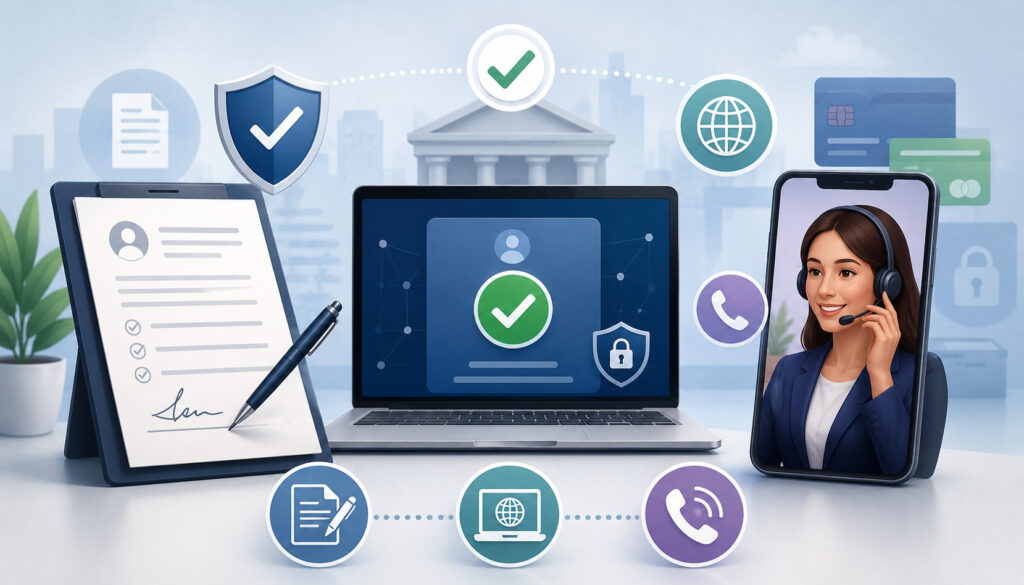
ACH payment consent may be collected through paper documents, electronic forms, customer portals, hosted payment pages, payment links, contracts, and supported telephone workflows. The correct method depends on the transaction type, account type, payment channel, provider capabilities, and applicable requirements.
Regardless of the channel, the business should preserve both the terms and the evidence of approval. Saving only the customer’s bank details does not show what authorization statement appeared or what payment schedule was accepted.
Written ACH Authorization Forms
A written ACH bank authorization form may be completed in person, mailed, included with a contract, or uploaded as a scanned document. Paper forms can be familiar to customers and practical for property offices, schools, membership organizations, field-service providers, nonprofits, and businesses with face-to-face enrollment.
The customer should have enough time to review the payment terms before signing. Completed forms should be checked for missing dates, unchecked payment-type selections, unclear account numbers, and absent signatures before any debit is initiated.
Paper records require careful protection because they may display full routing and account numbers. Do not leave completed forms on desks, in unlocked cabinets, in vehicles, or in general document trays.
Scan and index them through an approved process when appropriate, restrict access to the original, and follow a documented destruction policy when the retention period ends. Provide the customer with a copy rather than requiring the customer to rely on memory.
Online ACH Authorization Forms
An electronic ACH authorization form can be presented through a secure payment page, customer portal, electronic invoice, enrollment flow, or payment gateway. It may use an electronic signature, typed name, unchecked consent box, authenticated customer login, or another affirmative action.
Before submission, the page should display the business identity, payment purpose, amount or calculation method, debit date or recurring schedule, cancellation instructions, and authorization statement. The consent control should not be preselected, hidden, or combined with unrelated marketing permission.
The stored record may include the exact authorization language, date and time, customer identifier, form version, electronic signature, confirmation page, and relevant authentication data.
Industry material concerning online debit proof emphasizes that adequate evidence depends on the authorization process, identity controls, transaction type, and operating model. After submission, send a digital receipt or make a reproducible copy available in the customer portal.
Phone-Based Authorization Records
Phone authorization may be available for certain ACH transactions when supported by the payment provider and applicable requirements. Because verbal permission can be more difficult to prove, businesses should not improvise a telephone ACH process without guidance.
A controlled phone workflow may include an approved script, customer identity checks, the payment amount, debit date, payment purpose, recurring terms where permitted, cancellation method, staff member’s name or identifier, call date and time, and a confirmation delivered after the call.
Employees should read the required authorization wording consistently rather than summarizing it differently for each customer. Records should show that the customer affirmatively agreed after hearing the relevant terms.
Call recording laws and authorization requirements can vary. Businesses should obtain professional and provider guidance before recording conversations or relying on oral consent. Where the channel is unsupported, send the customer a secure electronic ACH authorization form instead of collecting sensitive bank information through an informal call.
Customer ACH Authorization Form Fields
A customer ACH authorization form should collect enough information to identify the payer, describe the payment, route the transaction, and prove consent without collecting unrelated data. Every requested field should have a clear operational purpose.
Forms should also distinguish customer-facing information from internal processing fields. The customer may provide the account-holder name and payment terms, while the business adds an authorization ID, customer account number, invoice reference, staff reviewer, or payment token.
Customer, Business, and Bank Information
Common customer fields include the account-holder name, billing address where relevant, email address, phone number, customer number, and business name for a corporate payer. For B2B ACH payments, the form may also request the signer’s title and confirmation that the signer is authorized to act for the organization.
The business section should display the billing identity customers will recognize, along with a support email address, telephone number, portal location, or mailing address. Where the bank-statement description differs from the public-facing name, explain the expected descriptor.
Bank fields may include:
- Account-holder name.
- Account type.
- Routing number.
- Account number.
- Bank name where useful.
- Secure verification or payment token.
- Confirmation that the signer may use the account.
For additional context on corporate payment workflows, see this guide to B2B ACH payments.
Payment and Authorization Information
The payment section should state whether the ACH debit form covers a one-time, recurring, or variable payment. Include the amount, maximum amount, or calculation method; the expected date or schedule; the payment purpose; and any related invoice, order, contract, membership, donation, or property account.
The ACH authorization agreement language should communicate that the customer permits the identified business to initiate ACH entries according to the displayed terms. Where credits may be used for refunds or corrections, the form can address that function with appropriate guidance.
The authorization should also explain how the customer can revoke future permission, where to send the request, and what cutoff applies before the next scheduled debit. Avoid hidden cancellation instructions or a process that customers cannot reasonably use.
The final portion should capture approval through a signature, electronic signature, typed name, checkbox, or another supported method. Record the authorization date and provide a copy or confirmation containing the essential terms.
ACH Authorization Form Requirements, E-Signatures, and Verification
ACH authorization form requirements are not identical for every transaction. They can vary based on whether the account is consumer or commercial, whether the entry is one-time or recurring, and whether authorization is collected online, in writing, or by telephone.
Businesses should review requirements with their payment provider instead of relying on a generic form downloaded from an unrelated website. The provider can explain supported transaction classifications, form templates, record-retention expectations, verification tools, and procedures for responding to authorization requests.
General Authorization Requirements
At a practical level, an ACH payment permission form should create evidence that the account holder knowingly approved the payment. The form should identify the parties, describe the debit, establish its scope, record affirmative consent, and remain reproducible.
For recurring consumer debits, Regulation E’s signed-or-similarly-authenticated writing and copy requirements are particularly important. An electronic record can potentially satisfy the authorization requirement when implemented correctly, but the business should preserve the record in a form that can be accurately reproduced.
Network authorization guidance also distinguishes payment authorization from access to financial data. Permission to connect a bank account or share account information does not automatically authorize an ACH debit. A separate payment authorization may still be required.
Because requirements can change and may interact with other obligations, forms and workflows should be reviewed periodically by qualified professionals.
Electronic Signatures and Audit Trails
Electronic signatures can include more than a drawn signature image. Depending on the workflow, evidence may consist of a typed name, checked consent box, authenticated portal action, signature certificate, timestamp, customer login, email confirmation, and stored copy of the terms.
The record should show intent. A customer should understand that selecting the consent control and submitting the page authorizes an ACH payment under the displayed conditions. The system should preserve the version of the authorization statement that appeared at the time rather than linking only to a web page that can later change.
An effective digital audit trail may include:
- Authorization date and time.
- Customer or user identifier.
- Exact authorization text and version.
- Payment amount and schedule.
- Masked account reference or token.
- Authentication steps completed.
- Confirmation delivered to the customer.
- Later amendments or revocations.
Avoid collecting an electronic signature in one system while storing the payment terms in an unrelated location with no reliable link between them.
Bank Account Verification Does Not Replace Authorization
Bank account verification helps determine whether account information is valid or whether the payer appears to control the account. Common methods include routing-number checks, micro-deposits, micro-entries, instant account verification, account-holder matching, and provider-managed validation services.
Verification addresses accuracy and fraud risk. Authorization addresses permission. A successfully verified account does not show that the customer agreed to a particular debit amount or recurring schedule.
For internet-initiated consumer debits, network rules require account-number validation as part of a commercially reasonable fraudulent-transaction detection system before the account number’s first use and after a change. Businesses should ask their provider how its workflow satisfies that requirement.
Verification can reduce incorrect-account returns and customer frustration, but it should be integrated with consent, payment confirmation, and secure recordkeeping.
ACH Authorization Forms and Payment Security
ACH authorization records may contain information that can be misused if exposed. Routing numbers, account numbers, signatures, customer contact details, authentication records, and payment history should be protected throughout collection, transmission, storage, retrieval, and deletion.
Security is not achieved merely by adding a padlock icon to a form. Businesses need an approved payment environment, controlled employee access, secure transmission, protected backups, audit logs, and procedures for handling exports and paper documents.
Protecting Bank Account Data
Customers should not be encouraged to send full bank account information through unsecured email, ordinary text messages, open chat systems, shared spreadsheets, photographs, or handwritten notes. Provide an approved secure payment form, hosted page, encrypted portal, or provider-supported collection method.
Tokenization can allow the payment provider to store sensitive account information while the business uses a non-sensitive reference for future transactions. Where full account details must be retained, apply encryption, masking, access controls, logging, and an appropriate retention policy.
Paper authorization forms require equivalent care. Keep them in locked storage, control access, avoid unnecessary copies, and use secure disposal methods when records may be destroyed.
Businesses should also protect exported reports. A secure platform provides little benefit if an employee downloads unmasked bank data and saves it in a public folder.
Limiting Staff Access
Only employees with a legitimate business need should be able to view, change, export, or delete ACH authorization records. Permissions can be separated by role so customer service representatives see masked account information while designated billing administrators manage payment tokens and schedules.
Administrative actions should be logged. The audit trail can record who viewed or changed bank details, who updated a recurring schedule, who processed a cancellation, and who exported authorization records.
Access should be reviewed when employees change roles or leave the organization. Shared credentials should be avoided because they make it difficult to connect an action to a specific user.
Training is equally important. Employees should know how to direct customers to the secure form, how to identify incomplete authorization, how to protect paper records, and how to escalate suspicious account-change requests.
Security questions should be reviewed with cybersecurity professionals, the payment provider, banking partners, and other qualified advisers.
Storing ACH Payment Authorization Records
Strong recordkeeping allows a business to demonstrate what the customer approved and how the payment was handled.
Records may include the signed form, electronic consent log, customer copy, invoice, payment confirmation, recurring schedule, account-verification result, cancellation request, refund, return notice, and relevant customer communication.
The objective is not to retain every piece of information indefinitely. It is to maintain an organized, secure, and retrievable record for the required period while minimizing unnecessary exposure.
Why Recordkeeping Matters
An authorization record becomes important when a customer asks why an account was debited, claims that a recurring payment was cancelled, disputes an amount, or requests a copy of the original agreement. It can also help billing staff determine whether a payment was scheduled twice or applied to the wrong invoice.
Online authorization evidence should preserve more than a screenshot of the final page. Store the authorization wording, payment terms, timestamp, customer identifier, signature or consent action, and relevant authentication information. For paper forms, retain a readable copy with all pages and attachments.
Network discussions concerning proof of authorization emphasize that businesses must be able to retain and provide authorization records when requested.
Retention periods and response deadlines may depend on the entry type and provider agreement. Ask the ODFI or processor for documented requirements rather than applying an unsupported assumption to every transaction.
Organizing and Retrieving Records
Authorization records should be searchable by customer name, customer number, authorization ID, invoice, payment type, authorization date, and masked bank-account reference. Recurring records should also display whether the authorization is active, paused, expired, completed, or revoked.
A useful customer file may contain:
- Original authorization.
- Customer confirmation or delivered copy.
- Payment schedule.
- Invoice or contract references.
- Changes to bank information.
- Changes to amount or frequency.
- Payment reminders.
- Return and refund records.
- Cancellation request and confirmation.
Avoid storing the same form in multiple uncontrolled locations. A central system with role-based permissions and backups is easier to protect and review than a collection of inboxes, local drives, paper folders, and CRM notes.
Conduct retrieval tests periodically. Select a small sample of transactions and confirm that staff can locate the supporting authorization promptly without exposing unrelated customer records.
Revocation, Unauthorized Returns, and Customer Communication
Authorization is not a one-time administrative task that can be ignored after enrollment. Businesses must manage changes, cancellations, failed payments, and customer questions throughout the payment relationship.
Recurring billing systems should connect authorization status to the payment schedule. When an authorization is cancelled, the change should reach the system that creates ACH entries before the next applicable processing deadline.
Authorization Revocation and Cancellation
The ACH customer authorization form should tell customers how to cancel future debits. Methods may include a secure portal, designated email address, telephone process, mailed notice, or written request. The method should be accessible and consistently monitored.
When a request arrives, staff should verify the customer appropriately, record the date and time, identify the affected authorization, stop future debits, and send confirmation. Keep the revocation record with the original authorization.
A customer’s cancellation should not be left in a general support inbox while the billing system continues processing. Establish an internal cutoff and escalation procedure for requests received near a scheduled debit.
Regulation E also provides consumers with a right to stop certain preauthorized electronic fund transfers through their financial institution when notice is provided within the applicable timeframe.
A clear business-side cancellation process may reduce the need for customers to use bank stop-payment or dispute procedures.
Unauthorized and Other ACH Returns
An ACH return occurs when a receiving financial institution sends an entry back rather than completing it as originally submitted. Reasons can include insufficient funds, an invalid account, a closed account, revoked authorization, an unauthorized debit, or another condition represented by a return code.
Unauthorized return claims may arise when no authorization exists, the amount or date falls outside the approved terms, a one-time form is reused, a cancellation is not applied, or the customer does not recognize the billing description. Poor documentation can make even a valid payment difficult to explain.
Businesses should categorize returns instead of treating them all as failed payments. An NSF return may require a different response from an unauthorized or revoked return. Do not automatically reinitiate a returned debit without determining whether reinitiation is permitted.
This guide to common ACH return codes can help billing teams understand why transactions are returned and what operational issue may require attention.
Customer Communication Reduces Confusion
Communication should begin when authorization is collected and continue throughout the payment relationship. Give the customer a copy of the authorization, confirm the next payment date, and provide a support contact for questions.
For recurring or variable payments, use reminders, invoices, account statements, or portal notices to reinforce the amount and expected date. Failed payment messages should state what happened without exposing full bank details. Cancellation confirmations should identify the payment plan that has been stopped.
The billing description should be recognizable. When the descriptor differs from the name customers know, disclose the expected description during authorization and in confirmation messages.
Payment receipts can display the amount, date, invoice, payment method, and masked account digits. They should not include the complete routing or account number.
ACH Payment Authorization Forms Checklist
The following checklist can be used when creating, updating, or reviewing ACH authorization forms. Every “no” or “unclear” answer should be investigated before the form is placed into production.
| Form area | Question to ask | Why it matters | Priority |
| Customer identity | Is the payer clearly identified? | Connects permission to the account holder | High |
| Business identity | Will the customer recognize the originator and descriptor? | Reduces statement confusion | High |
| Payment type | Is the debit one-time, recurring, or variable? | Defines the authorization’s scope | High |
| Amount | Is the amount fixed or is the calculation method explained? | Prevents unexpected charges | High |
| Timing | Is the date, frequency, or billing event clear? | Sets payment expectations | High |
| Bank details | Are details collected through an approved secure channel? | Supports accurate and protected processing | High |
| Consent | Does the form specifically authorize ACH activity? | Documents permission | High |
| Cancellation | Can the customer understand how to stop future payments? | Supports revocation handling | High |
| Approval | Is consent signed or otherwise affirmatively recorded? | Establishes evidence of agreement | High |
| Customer copy | Is a reproducible copy or confirmation provided? | Helps the customer retain the terms | High |
| Storage | Can authorized staff retrieve the record securely? | Supports inquiries and disputes | High |
| Workflow | Does cancellation status update the billing system? | Prevents debits after revocation | High |
Common Mistakes to Avoid
One of the most serious mistakes is treating account information as payment permission. Other common problems include vague consent wording, missing signatures, blank amounts, unclear recurring schedules, hidden cancellation instructions, and failure to provide the customer with a copy.
Operational mistakes can be equally damaging. These include storing forms in employee inboxes, allowing excessive access, failing to record account changes, processing after revocation, using an expired authorization, and initiating duplicate payments.
Another frequent problem is channel mismatch. A business may collect a checkbox through a basic contact form but lack the timestamp, authorization text, authentication evidence, and customer confirmation needed to support the payment.
Forms should also match actual billing practices. An agreement describing a fixed monthly payment should not be used for unpredictable invoice amounts without reviewing whether updated permission or notices are needed.
Staff training and periodic form reviews help prevent these issues from becoming routine.
How to Create an ACH Authorization Form Step by Step
Begin by identifying the use case: one-time invoice, recurring subscription, variable balance, rent, donation, membership, service payment, or B2B collection. Then confirm the account type, payment channel, and provider-supported authorization method.
Build the form in this order:
- Identify the customer and account holder.
- Display the business and billing identity.
- Select one-time, recurring, or variable authorization.
- State the payment amount or calculation method.
- State the date, frequency, or payment event.
- Add a clear ACH authorization statement.
- Explain cancellation and revocation.
- Collect affirmative consent.
- Provide a copy or confirmation.
- Store the record securely.
- Connect authorization status to billing.
- Monitor payments and returns.
A detailed ACH authorization form setup guide can support the planning process. However, the final form should still be reviewed against provider instructions and professional guidance.
Choosing ACH Processing With Authorization Support
An ACH payment system should do more than accept routing and account numbers. It should help the business collect, confirm, protect, update, and retrieve authorization records.
Compare the complete workflow rather than evaluating only transaction fees. Weak authorization tools may create manual work, increase exposure of bank data, and make cancellations difficult to manage.
Questions to Ask an ACH Processor
Ask prospective providers how their systems support one-time and recurring authorization, electronic signatures, account validation, customer confirmations, variable payment notices, and cancellation workflows.
Additional questions include:
- Are hosted secure forms available?
- Can authorization language be customized?
- Is the exact accepted version retained?
- Does the system record timestamps and user activity?
- Can customers receive or download a copy?
- How are account numbers tokenized or masked?
- What roles and user permissions are available?
- How are authorization records retrieved?
- What retention period is required?
- How are ACH returns reported?
- What happens after a revoked or unauthorized return?
- Are phone authorizations supported?
- Can the system integrate with invoicing, accounting, or customer-management software?
Request written documentation. Sales demonstrations may not reveal how records are exported, stored, or produced after a payment dispute.
Choose a Workflow That Makes Authorization Clear
The most suitable workflow should be understandable for customers, manageable for employees, and well documented for the business. A secure hosted page may be better than emailing a form. A customer portal may be more appropriate for recurring billing because it can display the schedule and allow supported updates.
Consider how the system handles the entire authorization lifecycle. Customers may change bank accounts, upgrade services, pause subscriptions, dispute invoices, revoke permission, or restart payments later. Each change should be recorded and connected to the correct payment plan.
The workflow should also minimize manual entry. Automatically linking an authorization to a customer account and payment schedule can reduce duplicate debits and data-entry errors.
Select the setup with input from billing, accounting, customer support, information security, and professional advisers. Authorization is both a customer-consent process and an operational control.
Frequently Asked Questions
What are ACH payment authorization forms?
ACH payment authorization forms are written or electronic records showing that an account holder permits a business or organization to initiate an ACH transaction according to stated terms.
For an ACH debit, the form usually identifies the payer, bank account, payment amount or calculation method, payment date or frequency, business initiating the debit, and cancellation procedure.
The authorization may cover one transaction or a continuing payment arrangement. It should be stored with enough supporting information to show what the customer approved.
What should an ACH authorization form include?
An ACH authorization form commonly includes the account-holder name, useful contact details, business identity, account type, routing and account information or secure token, payment type, amount, debit date, recurring schedule, authorization statement, cancellation instructions, and signature or electronic consent.
It may also include an invoice number, customer number, contract reference, account-verification information, statement descriptor, and confirmation that the signer is authorized to use the account.
Is an ACH debit authorization form required before debiting a customer?
A business should obtain valid authorization before initiating an ACH debit. The form and authorization method must match the transaction, account type, and applicable requirements.
For preauthorized electronic fund transfers from a consumer account, Regulation E requires a writing signed or similarly authenticated by the consumer and requires the person obtaining the authorization to provide a copy.
Other ACH transactions can have different channel-specific and network requirements, so provider guidance is essential.
What is the difference between one-time and recurring ACH authorization forms?
A one-time ACH payment authorization form permits one identified payment or payment event. It should not automatically be reused for unrelated future debits.
A recurring ACH customer authorization form permits repeated payments under a defined schedule or billing arrangement. It normally requires additional information about frequency, duration, changing amounts, cancellation, and communication.
Businesses should make the distinction prominent so customers know whether they are approving one debit or ongoing access.
Can ACH authorization forms be completed online?
Yes. An online ACH authorization form can use electronic signatures, typed names, checkboxes, secure customer logins, or other supported methods of recording affirmative consent.
The business should preserve the exact terms, payment details, timestamp, customer identity information, and relevant authentication record.
It should also provide the customer with a reproducible confirmation or copy. A basic web form that saves only bank details may not create adequate evidence of payment authorization.
How should businesses store ACH authorization forms?
Store forms in a secure system with encryption, restricted user permissions, audit logs, backups, and a reliable search method. Use masking and tokenization where possible so employees do not routinely see full account numbers.
Paper records should be locked and indexed. Digital records should connect the authorization to the customer, payment schedule, invoices, changes, returns, and cancellation history. The payment provider should confirm the required retention period and how quickly records must be produced.
Can a customer cancel an ACH authorization form?
Customers can revoke future ACH permission according to applicable rules and the cancellation procedure stated in the authorization. Businesses should make that procedure easy to find and should process requests promptly.
After receiving a valid cancellation, record it, update the billing system, stop future debits within the applicable timeframe, send confirmation, and retain the request with the original authorization. A new authorization may be needed before future debits resume.
How do ACH authorization forms help reduce unauthorized returns?
Forms reduce avoidable disputes by documenting the customer’s consent and explaining the amount, payment date, billing frequency, business identity, and cancellation procedure. Confirmation messages and recognizable statement descriptions reinforce those expectations.
However, a form cannot prevent every return. Businesses must also verify account details where appropriate, protect customer data, process cancellations, monitor return codes, avoid duplicate debits, and maintain accessible proof of authorization.
Conclusion
ACH payment authorization forms create a documented connection between customer permission and bank-to-bank payment processing. They help define who may initiate a debit, what amount may be collected, when payment will occur, whether additional payments are permitted, and how future authorization can be revoked.
Effective forms distinguish one-time payments from recurring and variable arrangements. They collect only necessary information, present understandable payment terms, record affirmative consent, provide the customer with a copy, and protect bank account data through secure systems and limited access.
The form must also be supported by reliable procedures. Businesses should verify that payments match the authorization, store records securely, communicate upcoming charges, process cancellations promptly, monitor ACH returns, and train employees who handle bank payments.
When ACH payment authorization records are clear, protected, and easy to retrieve, businesses can answer customer questions more effectively, maintain cleaner billing records, and reduce preventable payment disputes.
Professional and provider guidance should be used to adapt these general practices to each organization’s payment channels, customers, and responsibilities.
Leave a Reply